‘Whatever it takes.’ This school teaches SC a lesson on helping Hispanic students succeed
READ MORE
The New Majority
Nearly half of Hilton Head’s public school students are Hispanic and Latino. New challenges must be met for them — and the island — to prosper.
Expand All
Steven was ready to discover how a dog would find its lost purple hat.
But before the Hispanic first grader at Red Cedar Elementary School in Bluffton could start narrating from the book in front of him, his teacher, Erin Berglind, asked him how he knew the tale was fictional.
“Because dogs can’t talk,” Steven answered rightly, one leg tucked under the other on a miniature plastic chair.
When he slowly read aloud that the hat had been found on a “couch,” though, he stumbled with the word’s pronunciation.
“I will be honest, he is a little bit below grade level,” said Berglind, after Steven scurried back to class after their coaching session. “But one of the things that we do here is we meet students where they are.”
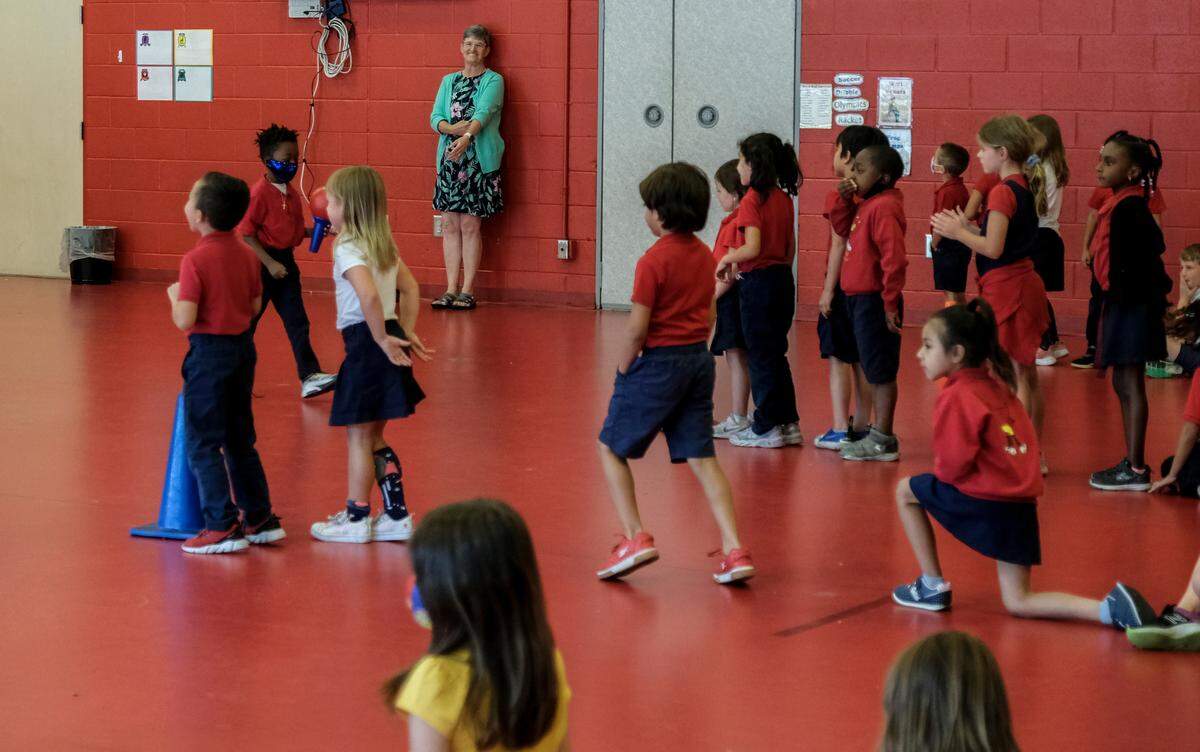
As the Hispanic and Latino population has rapidly grown in Bluffton and South Carolina, Red Cedar has provided a model for others to follow for over a decade.
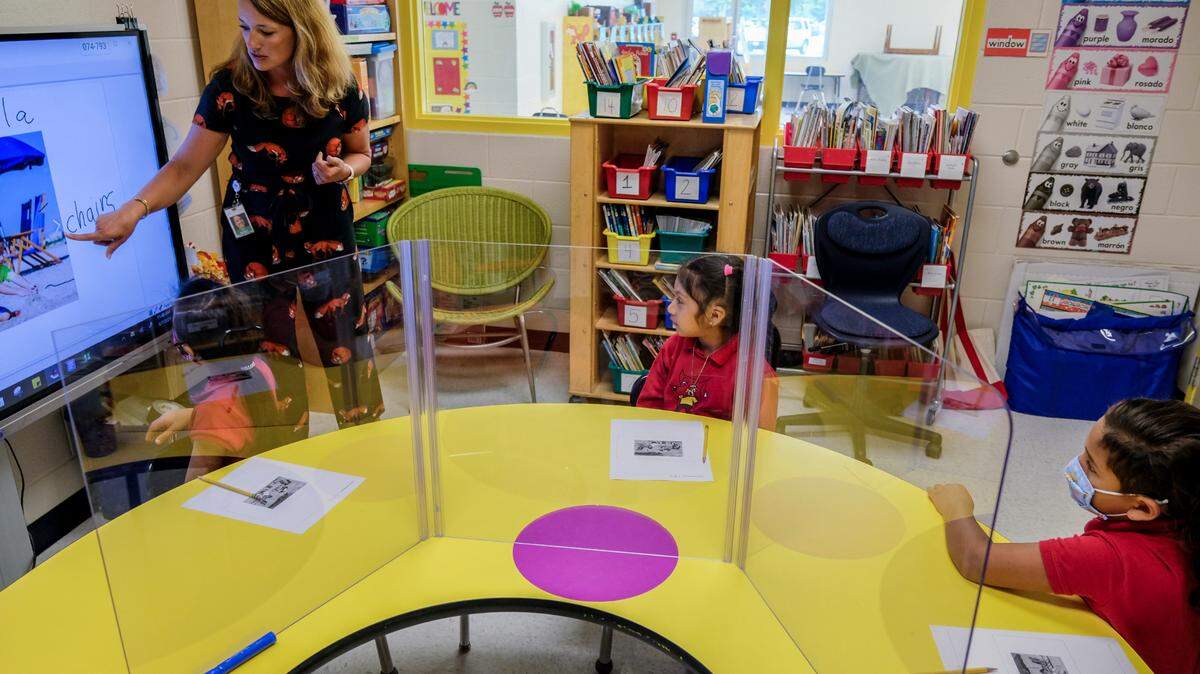
Almost half of all students at Red Cedar receive language help from Berglind and two other full-time English to Speakers of Other Languages, or ESOL, instructors. The team is part of a larger group of staff devoted to supporting Hispanic students that have for years made up the largest segment of its student body.
Shortly after Red Cedar opened in 2009, it started enrolling more Hispanic students than any other school in the state — a title it held for three years in a row. It has enrolled a majority of Hispanic students ever since.
More schools have recently caught up. Nine in Beaufort County School District currently teach more Hispanic students than any other race or ethnicity. Only two other S.C. districts, Greenville and Horry counties, enroll more Hispanic students.
But bilingual students at Red Cedar outperform those at many neighboring institutions. Last year, the school was among the highest performing in the district with more than 100 English learners. Despite the added hardship of the 2020 pandemic, a majority of students learning English at the school — most of whom are native Spanish speakers — stayed on track. Roughly 58% of English learners at Red Cedar met the English proficiency targets set by the state, compared to fewer across Beaufort County and even less statewide.
Beyond the efforts of its practiced ESOL teaching trio, another reason for student success may be the strength of its support for Spanish-speaking parents.
Red Cedar’s leadership has long prioritized translating school communications into Spanish so multilingual parents can keep up, even in a state that passed a law in the 1980s mandating that the official use of languages other than English should be prohibited in most settings, save some educational ones. The school has upheld the importance of using Spanish on the law’s grounds.
“It is a part of our school culture,” said Assistant Principal Cynthia Laizer, about its tradition of ensuring messages sent home are multilingual. “It would be ridiculous for us to send any kind of communication out that only half of our population could access.”
The school’s principal, Dr. Kathleen Corley, called upon her musical training to explain why respecting the home language of students has always been important at the school.
“I used to give kids this kind of speech about ‘Don’t diss anybody else’s music because you don’t like it.’ Because it comes from here,” she said, pointing to her heart. “Well, language would be worse.”
For all else, Red Cedar’s Guatemalan-born liaison, Rosana Hellstrom, is there.
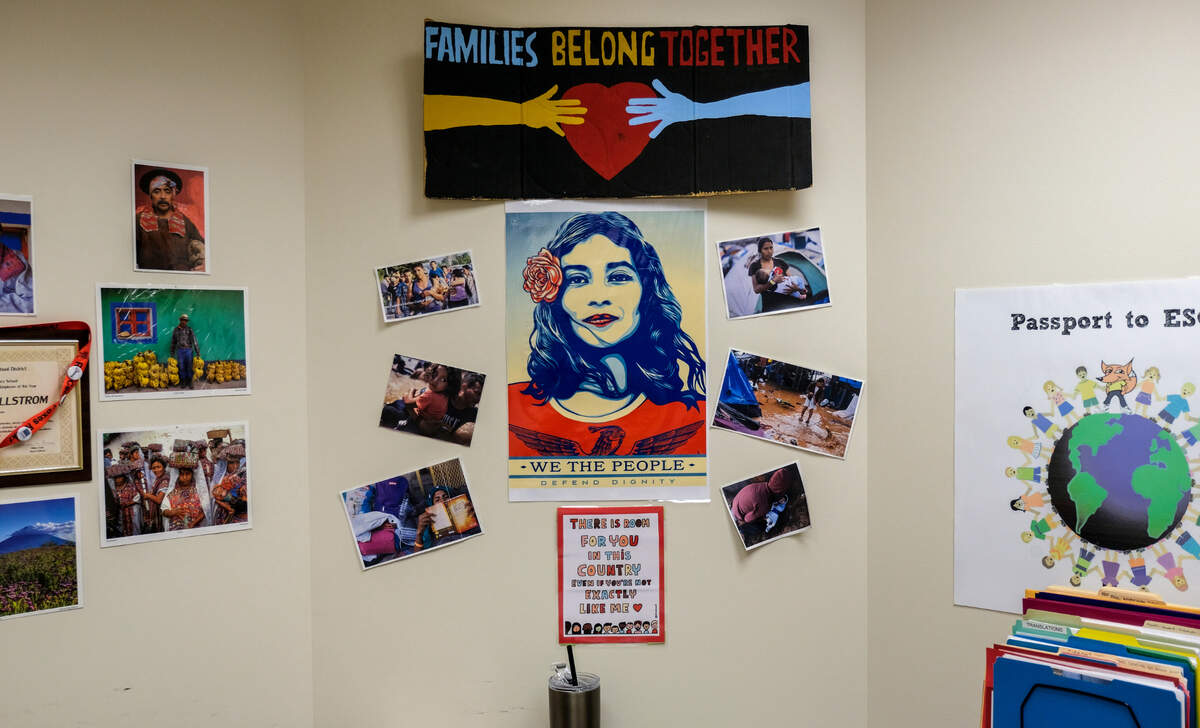
Beaufort County assigns bilingual liaisons to every school in the district to help multilingual families communicate with monolingual staff about their children, but each liaison’s strategy for accomplishing that expansive task can be different. The wall in Hellstrom’s office gives away her approach.
“There is room for you in this country,” declares one poster at the bottom. “Families belong together,” states another, at the top.
And in the center of the collage rests a version of the iconic image designed by Charleston-born graphic artist, Shepard Fairey. A smiling Latina woman’s blue and white-streaked hair is decorated with a single red rose above her ear. Below her neck, in all capital letters, are the words: “DEFEND DIGNITY.”
Since the school opened, Hellstrom has followed that directive by not just helping multilingual parents communicate with teachers on school property, but getting to know the families through home visits, too.
Going to where the families lived “gave us a deeper understanding of not only their needs, but who they are,” Hellstrom said. “But then COVID came.”
How the pandemic changed Red Cedar
Hispanic families were particularly vulnerable to financial shifts owing to the pandemic, the principal said.
“The lower the income, the more it changed, generally speaking,” Corley explained. “And not to say that all second-language learners in our school are low income, but the vast majority are.”
More than half of the students at Red Cedar Are classified by the state as pupils in poverty, and it’s common for two parents to have five jobs between them, the principal added.
Hellstrom said she continued to make home visits to ensure multilingual families could understand the new requirements and keep up with the challenges of virtual learning in 2020. Amidst fears of contracting COVID-19, doing her job started to feel like “going into a war zone.”
“Rosana was a lifeline,” Corley remembered. For her part, the bilingual liaison praised the principal’s donations to a family in need.
The pandemic still made ripples few could anticipate. Between August and December, Red Cedar’s enrollment dropped by 134 students, from the original head count of 706. The loss was the largest in at least eight years.
Some of those students left Bluffton to move in with relatives that lived elsewhere, and more well-off families removed their children so they could attend private schools and learn in-person, Corley explained.
As for the others, “sometimes we didn’t know,” the principal said.
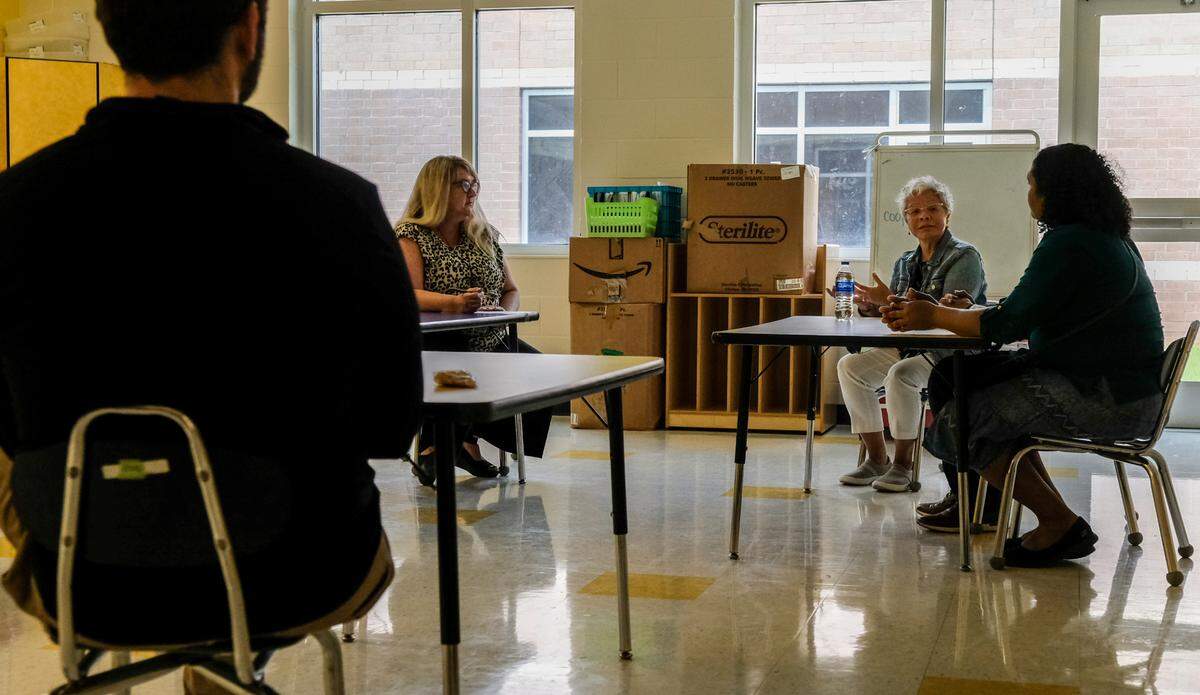
More enrolled students now fit the definition of homeless than before, Corley said, explaining that ‘homeless’ can mean that multiple families live together under one roof.
And it didn’t help that as jobs were being lost and hours of work reduced during the economic downturn, a nearby apartment complex where many Hispanic Red Cedar students had been living, Onyx Luxury Apartment Living, raised the rent “an extraordinary amount,” she added.
The apartment complex’s community manager declined to confirm details of a rent increase at Onyx during the pandemic or provide a comment, saying she had no knowledge of the situation.
But at least one good thing to come of the pandemic for low-income parents has been the flexibility of Zoom, Hellstrom mentioned. Working parents who might otherwise have missed the chance to connect with the school because of their jobs now attend meetings via their cell phones.
As children return to school in-person this year, Red Cedar will continue to use whatever method gives families the greatest opportunity to meet, confirmed Corley in July.
That commitment to students is indicative of what Hellstrom thinks makes Red Cedar special.
“I love our motto here at school,” the bilingual liaison said. “We really try to do that: ‘Whatever it takes.’”
This story was originally published August 29, 2021 at 5:00 AM with the headline "‘Whatever it takes.’ This school teaches SC a lesson on helping Hispanic students succeed."