To give kids a better chance, some Hispanic families skirt enrollment rules on Hilton Head
READ MORE
The New Majority
Nearly half of Hilton Head’s public school students are Hispanic and Latino. New challenges must be met for them — and the island — to prosper.
Expand All
On an island that isn’t getting any bigger, the number of Hispanic and Latino students is growing and now represents nearly half of Hilton Head Island’s public-school student body.
Of the many reasons for that, one is an open secret. Some parents are skirting enrollment rules, continuing to send their children to Hilton Head schools even though they’ve moved off-island to Jasper County where housing is more affordable. It can be a matter of convenience, according to sources familiar with the practice. For others, it’s the belief that their children will be treated better and receive a superior education in Hilton Head schools over Jasper County ones.
The Beaufort County School District currently requires parents to annually confirm their address when enrolling their children by submitting documents, like a lease agreement and a recent cable bill, along with a signed form. Parents sometimes say their kids live with relatives that still reside on the island, then use that borrowed address for registration. Others might purchase the address or pay a resident’s utility bills to generate the necessary documents to support their residency claim.
Six parents, teachers and Hispanic leaders told reporters from The Island Packet and The State of the cross-county enrollment practice. The trend is sometimes their best solution to a series of residential, economic and academic obstacles thrust on the Hispanic community, they suggest, though it relegates the families to a position of legal limbo.
That the parents are willing to do what they believe is best for their children isn’t a new phenomenon.
“I don’t think that any parent doesn’t want their child to get ahead, and particularly in our population, when to get here, people have passed through deserts and difficult times,” said Yajaira Benet Uzcategui, a community health worker and program coordinator at PASOS, a group dedicated to health promotion in the Spanish-speaking community.
Many Hispanic families think that keeping their children in the island’s schools will allow them a better chance at that success, advocates said. Worrisome stories are whispered in the community of neighboring Jasper County’s schools.
Eric Esquivel, the owner and publisher of La Isla Magazine and a longtime leader in the region’s Hispanic community, told reporters that “tons” of families were living in Jasper County but registering their kids across county lines, though that’s against the rules. “And you know why they’re doing it? Because their kids are treated like the bottom of the barrel in Jasper County Schools,” he said.
“Hispanics are at the bottom of the totem pole, and they’re being passed over,” Esquivel added. “The way Latinos have been treated in Jasper County has been atrocious.”
Though laws meant to uphold equality require schools to keep multilingual parents as informed as others, interpreters for Spanish-speaking parents can be sparse in Jasper schools, parents said.
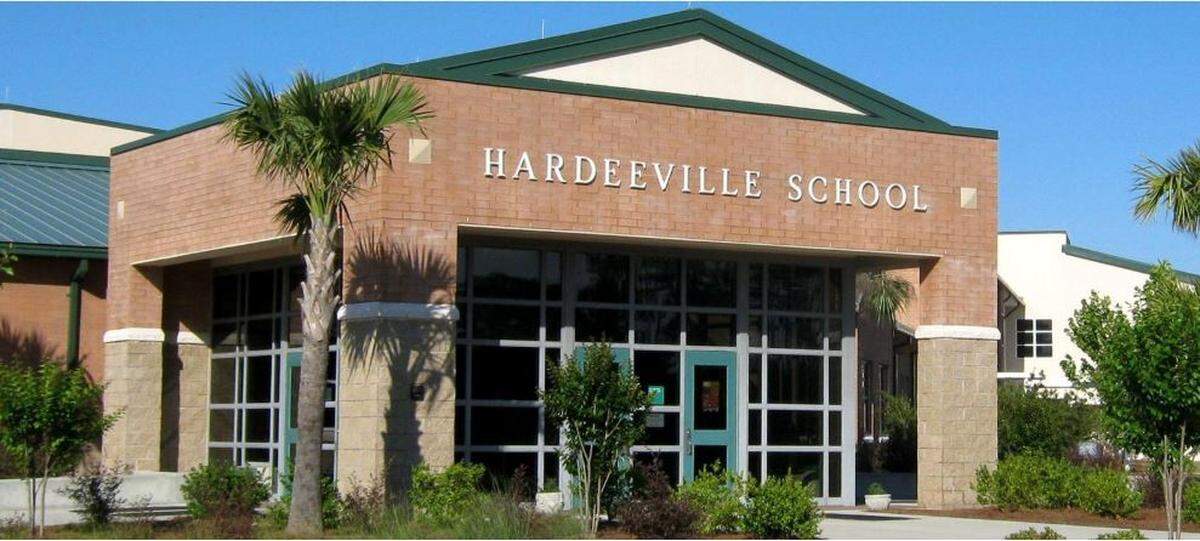
At Hardeeville Elementary School, the staff has gone long periods without making a single interpreter available for Spanish-speaking parents, effectively locking them out of their children’s education, said Norma Garcia, a Jasper County mother and community organizer whose son used to attend the school. During one of those absences, Garcia, who speaks Spanish, said she struggled to secure speech therapy for her child.
While a district spokesperson told a reporter that only staff are allowed to interpret in school meetings, Garcia said she had heard that something different happened in practice. Several years ago, one bilingual student at Hardeeville Elementary was so often removed from his classes to help front office staff with translation tasks that he struggled academically. His family has since moved back to Guatemala, his mother told Garcia.
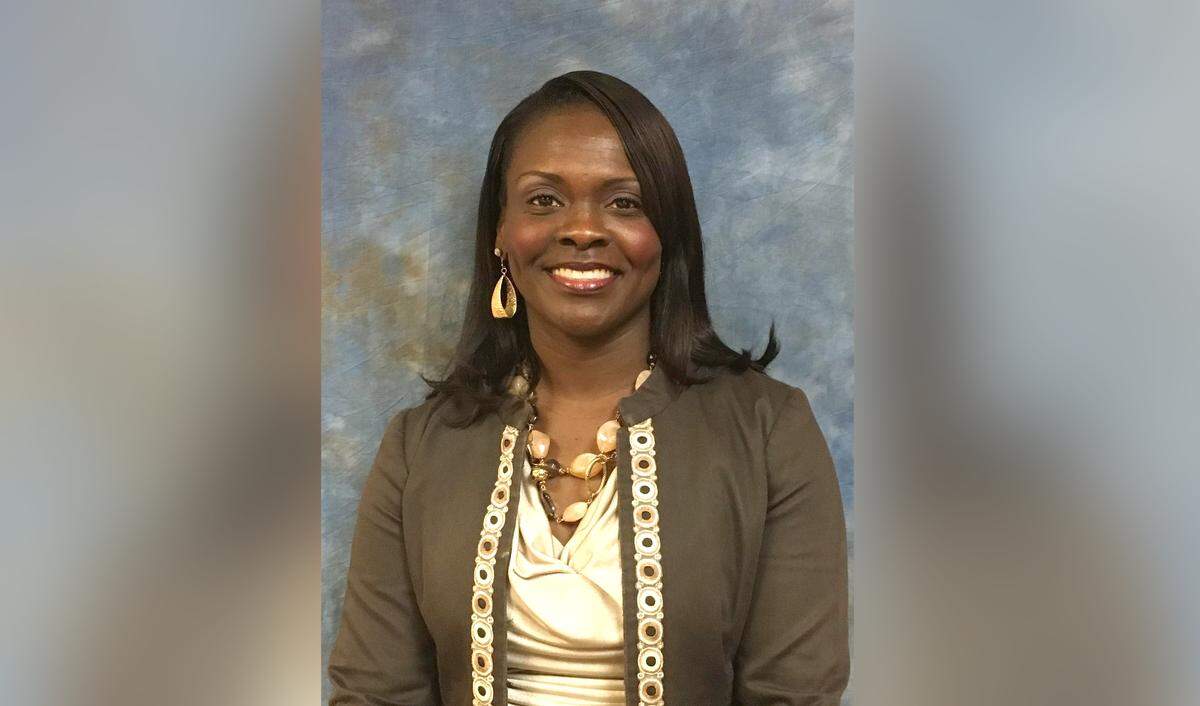
A spokesperson for Jasper County School District declined multiple requests for an interview. In a video the district subsequently posted to Facebook, Superintendent Rechel Anderson acknowledged the existence of a “notion that our Hispanic families don’t want to be a part of Jasper” but denied it to be true.
Anderson continued that she could not speak about occurrences in the district before she assumed her leadership role in 2018. But since then, “we’ve been building a foundation that will make sure that we are reaching our students where they are and our families where they are,” she said, including more Spanish-speaking staff and new programs geared toward Hispanic students.
A comparison of academic performance of English learners in the two school districts shows Hispanic children have historically performed better in Beaufort schools over those in Jasper.
English learners in Jasper schools, the majority of whom came from Spanish-speaking households, lagged far behind the state average on language proficiency exams last school year. Just 18% met progress targets. Meanwhile in Beaufort County, about 35% of students met their goals on the exams, and the district bested the statewide figure for English learner achievement.
A similar pattern played out on subject matter tests. At the high school level, at least half of all Hispanic students studying in Jasper scored an “F” on end-of-course exams in algebra and biology in 2020. In Beaufort, about one third of these students failed.
“Given the choice, (Hispanic families) would register the kid and keep them in the Beaufort County School District,” said Narendra Sharma, founder and chair of Neighborhood Outreach Connection, a non-profit that aims to reduce poverty. “If the choice is between Jasper and Beaufort, then it’s Beaufort. There’s no question about it.”
Another of the challenges driving the trend of cross-county enrollment is a familiar one: the near impossibility of finding an affordable place to live on the island, community leaders said. Many of the island’s Hispanic workers, among them low-wage earners who work multiple jobs cleaning villas, painting beach houses and otherwise maintaining the island’s attractions, can no longer live on Hilton Head.
“Little by little, they’ve been taking out (Hispanic) people to remodel the apartments and rent them to tourists,” said Patricia Urriola de Millan, a mother of two teenagers who attend schools on the island and another community health worker for PASOS, talking to a reporter in Spanish. “The lease ends, and then they don’t renew it. You have to leave.”
Even if families could manage to find an available unit, some can no longer pay the rent. Over the past decade, rates have risen on Hilton Head at a speed rivaling major metro areas like Charleston and Atlanta. It can cost almost $300 more to rent a two-bedroom apartment on the island than in neighboring Jasper County, estimates the U.S. Department of Housing and Urban Development.
“You’re squeezing these working families out,” said Sharma.
Some parents who moved to Bluffton are choosing to enroll their children on the island, reporters were told. But the district allows Bluffton students to attend Hilton Head schools in certain circumstances, making it hard to determine the number of families breaking enrollment rules.
Though the walls of their houses might be elsewhere, their lives remain on Hilton Head. The convenience of having their kids attend school near their jobs can be worth the added hassle of going through daily drop off and pick up lines, since busing to island schools is not available across the bridge, according to some who moved.
The cross-county enrollment practice is common in the Hispanic community, parents said, but the exact number who do it is unknown.
Some participating families approached by the newspaper did not feel comfortable talking with reporters about their choice. And the highest ranking school official of Beaufort’s school district maintained ignorance of the practice.
“We’re not really aware of that particular phenomenon,” said Frank Rodriguez, Beaufort County’s superintendent. If a school administrator is made aware of an issue, a residence check may be coordinated, a spokesperson said, and state guidelines are followed to verify the address.
But while some Hispanic families may choose to cross county lines to enroll their kids, many others send their children to Jasper’s schools — and elected officials say the district is improving.

Schools in Jasper no longer “at risk”
Enrollment data shows that many Hispanic families are sending their children to Jasper schools. Last school year, Hispanic students represented nearly 39 percent of the district’s 2,700 students. That’s up from five years ago when these students accounted for 26 percent, according to state Department of Education data.
The district now educates more than 1,000 Hispanic students, the state’s second largest such student body when considered as a portion of total enrollment, trailing only Saluda County’s school system.
Previously, the Jasper County School District has grappled with funding inequities caused by the state’s antiquated school funding formula that punished rural counties. The formula also failed to address the needs of districts with a high percentage of pupils in poverty, including Jasper where nearly 84% of students have been identified as such.
“[Comparing the Beaufort and Jasper school district is] not even apples-to-apples, [it’s] a whole different playing field,” said Jasper County Board of Education Chair Carolyn Bolden. The district is trying to even that field, she said.
Since 2018, a change has begun. The Jasper County School District now receives nearly $25,000 per student in local, state and federal dollars, according to state estimates provided to lawmakers, compared to about $16,000 for each Beaufort County School District student.
The additional dollars appear to be making a difference.
In 2019, Jasper educators elevated school test scores after years of earning the lowest possible “at-risk” ratings on state report cards. Three of the district’s four schools were rated “average” or “good.” In recognition of her performance in the new role, the Jasper County school board voted unanimously to give Anderson a “distinguished” evaluation in 2020.
And to accommodate the Hispanic student population, that year, the district began to hire more bilingual parent liaisons for each of its schools, said Bolden. A dual language immersion program in Spanish kicked off this fall for a group of kindergartners at Hardeeville Elementary.
“We’re doing everything in our power to provide every opportunity for the students in Jasper,” Bolden added.
Hardeeville Mayor Harry Williams said educational issues don’t change overnight, but the new administrators are making progress. They’re the “best that Jasper County has had probably in generations,” he said.
He noted that some of these initiatives have never before been tried in the district. Whether the efforts will encourage more Hispanic students to enroll in classrooms in Jasper remains to be seen.
“I think down the road we’re going to see the results,” Williams said.
This story was originally published September 2, 2021 at 5:00 AM with the headline "To give kids a better chance, some Hispanic families skirt enrollment rules on Hilton Head."