‘I saw him shine.’ How SC’s Lowcountry has evolved, through the eyes of immigrant moms
READ MORE
The New Majority
Nearly half of Hilton Head’s public school students are Hispanic and Latino. New challenges must be met for them — and the island — to prosper.
Expand All
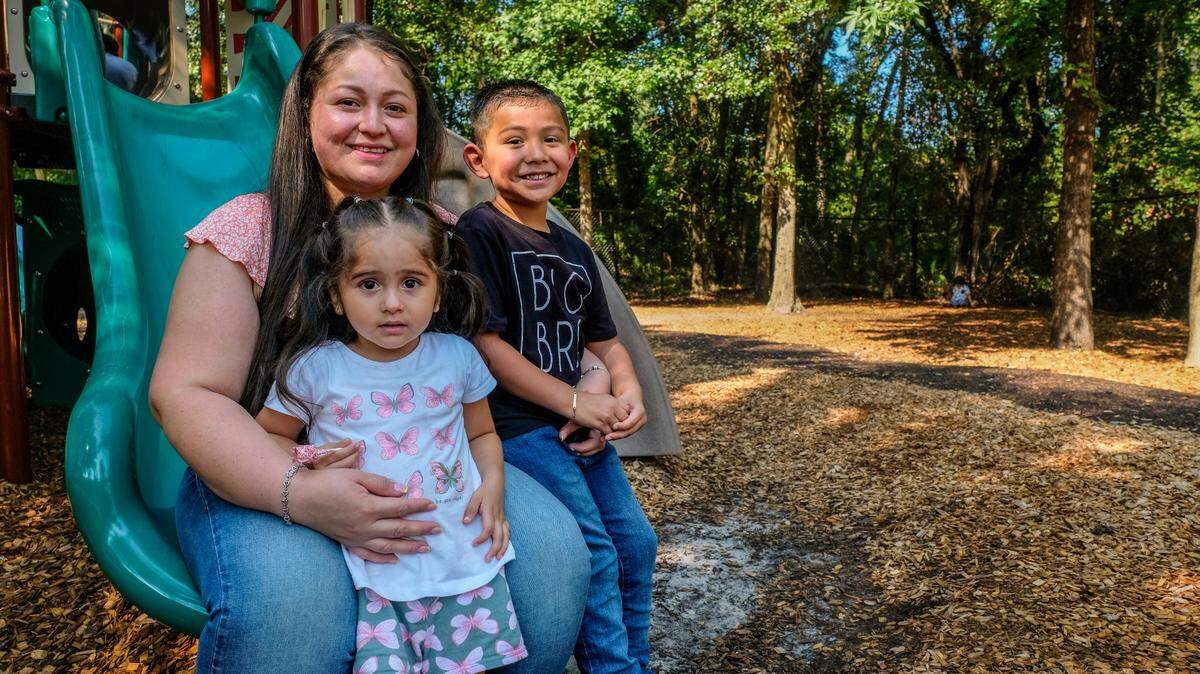
Liam Calderon Barahona, 6, is squealing with excitement.
“He thinks that first grade starts tomorrow,” says his mother, Scarleth Barahona, as the happy sound of children’s voices nearly drown out her words.
She’s speaking from a kindergarten graduation celebration on Hilton Head Island in June. Even though summer vacation hasn’t even begun, elementary school seems right around the corner for little Liam.
He is the new face of the island’s schools, a first-generation American born to Honduran parents and living in a home where Spanish and English mingle. His family rode a wave of immigration to Beaufort County and have worked for years to put down roots.
They are one of more than 5,000 Hispanic families building school communities on the island and in nearby Bluffton.
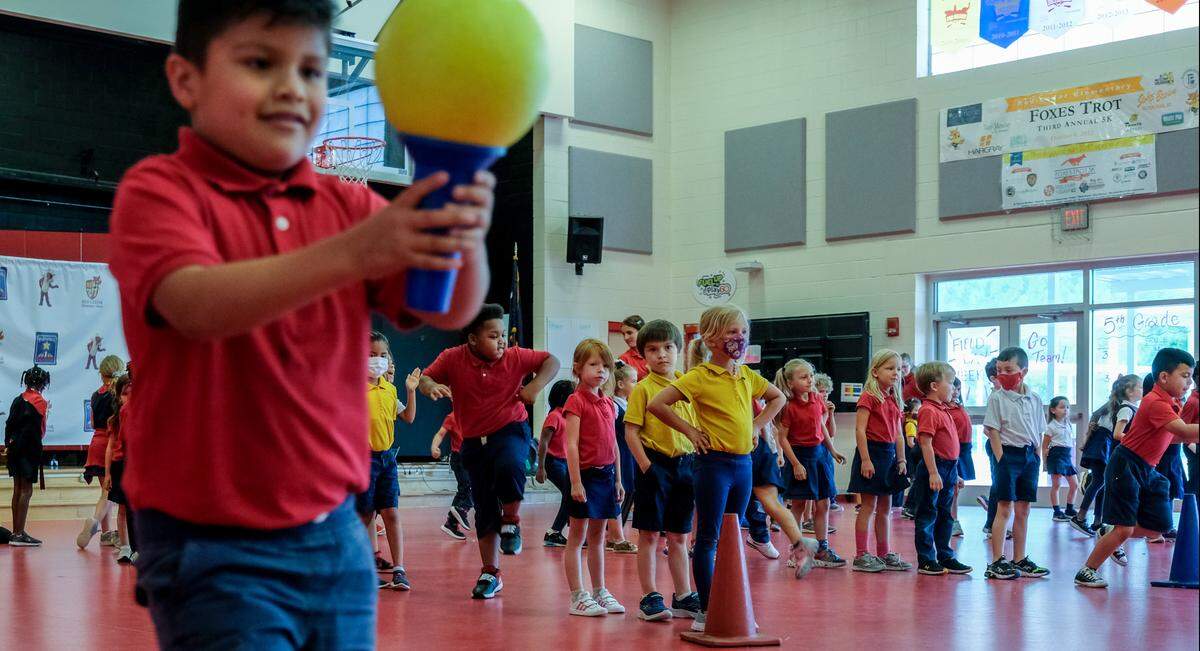
The Beaufort County School District now boasts the third largest Hispanic student population among S.C. school systems. Two of its five island schools enroll Hispanic-majority student bodies.
Reporters spoke to about a dozen Hispanic parents this year about their successes and challenges with their children’s education. Three of those conversations, translated from Spanish, reveal how much progress schools have made to welcome these families to the Lowcountry — and how much work is still required to support their futures.
Here are their stories.
Scarleth
Barahona joined her husband, Gerson Calderon, on the island eight years ago from Honduras, and the Lowcountry’s beauty struck her. It was a peaceful place to raise Liam and his younger sister, both born here.
Liam didn’t speak English when he started pre-K, but now he understands it perfectly.
It wasn’t always easy.
Scarleth remembers standing near her son at a Thanksgiving meal at school. She watched as a classmate grabbed his plate of food and threw it to the ground. “Eat it,” the other child demanded.
Scarleth ran to get her son’s teacher. “My son [is] quiet and timid. It’s true that he doesn’t speak English very well, but this can’t happen,” she told her.
Things changed, she said, because the teacher realized Scarleth and her husband were paying attention.
Since then, she’s felt the ways the schools are trying to reach out to parents like her who speak primarily Spanish. Language barriers and, for some, fears about immigration status, can keep them away.
“Many parents don’t know the tools to use, but there are options, in the schools as well,” she said, referencing bilingual educators and interpreters.
She’s found a place for her younger daughter at The Children’s Center, a daycare on the island, where Liam was enrolled over the summer. It’s practically their second home, she said.
In the evenings, Scarleth works on homework with her son. Directions on how to complete it don’t always come home in English and Spanish.
Sometimes she relies on Google Translate to read the correct English pronunciation of a word, when Liam stumbles.
But she’s been able to navigate the school district. It was at a bilingual meeting at the island that she learned for the first time there were two elementary school options for her son.
This year, he’ll attend Hilton Head Island School for the Creative Arts, where her mother hopes his knack for drawing will blossom.
It’s tough for her and her husband to feel completely a part of the school community. She works Monday to Friday cleaning homes on the island and then Saturdays taking care of vacation rentals and villas. Her husband remodels kitchens for a local company. There’s not a lot of time outside of work.
But her father in Honduras was a teacher. “Study, study, study,” was the message she heard, and she tells her kids the same. “I think it’s every parent’s dream from when their children are little that they study and they go to university,” she said. “Every year is a new challenge.”
Elsy
Elsy Gonzales arrived in Bluffton from New Jersey 15 years ago. Like many residents, she’s watched what was then a small town grow.
“The Hispanic-owned stores were few,” the Honduran immigrant remembered. “It was very difficult to find a translator at the [health] clinic or other places where you needed one if you didn’t speak English.”
Gonzales first worked as a hostess at a barbecue restaurant and for a time cleaned H.E. McCracken Middle School, where her 12-year-old son this year will enter 6th grade. Her three children have grown up in a very different Lowcountry town — the gateway to Hilton Head now boasts one of the region’s largest Hispanic and Latino communities.
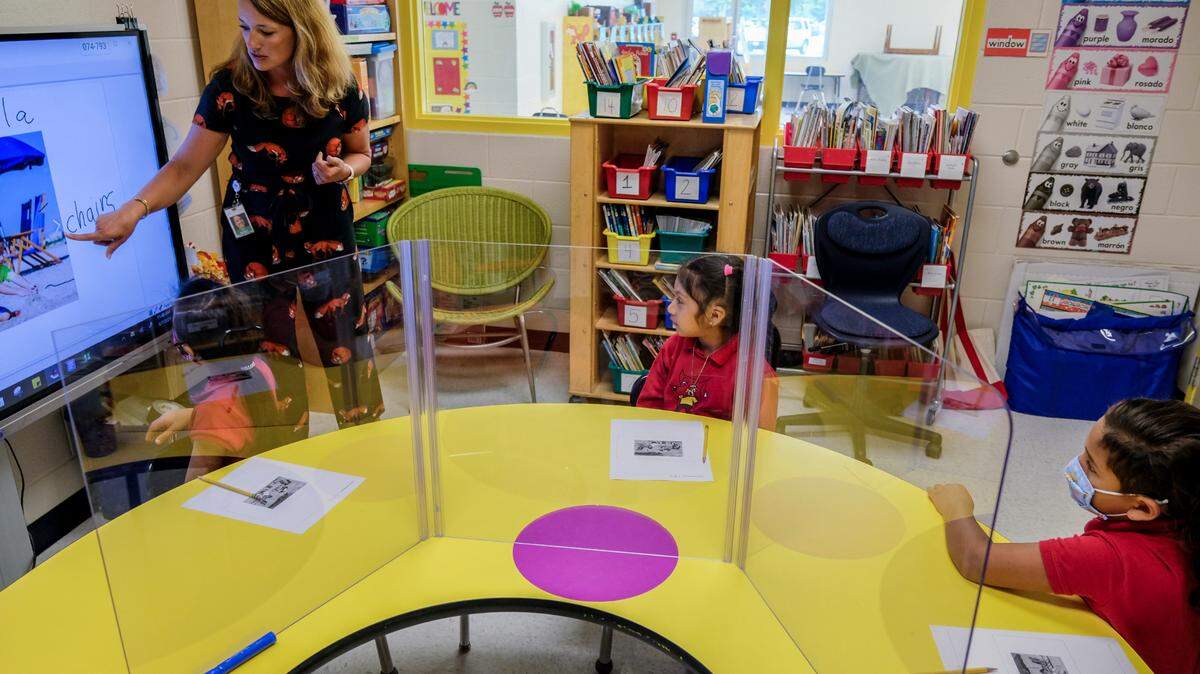
Gonzales credits the schools for evolving support systems for families like hers. She now understands a lot of English, but an interpreter is always at the ready for school meetings, she said.
Her daughter, now 17, arrived in seventh grade without speaking a word of English. “It was very hard for her to learn. I found her in my dining room crying, saying she didn’t understand anything and that she wanted to go back to Honduras,” Gonzales said. “Thank God her teachers gave her ESOL classes.”
She credits this special support for students developing fluency in English — today some 4,600 students in Beaufort County — with helping her daughter adjust.
Gonzales deals with the same issues many parents have. Bluffton’s schools attendance zones have shifted with its growth; some schools are overcrowded, she says. And her middle child endures bullying because he is an albino, preferring sweaters and hats even in the sweltering heat because of other classmate’s comments about the genetic condition that causes his skin to lack normal coloration.
“As parents, we should educate our children at home to not be so cruel, to respect other people’s differences,” she said.
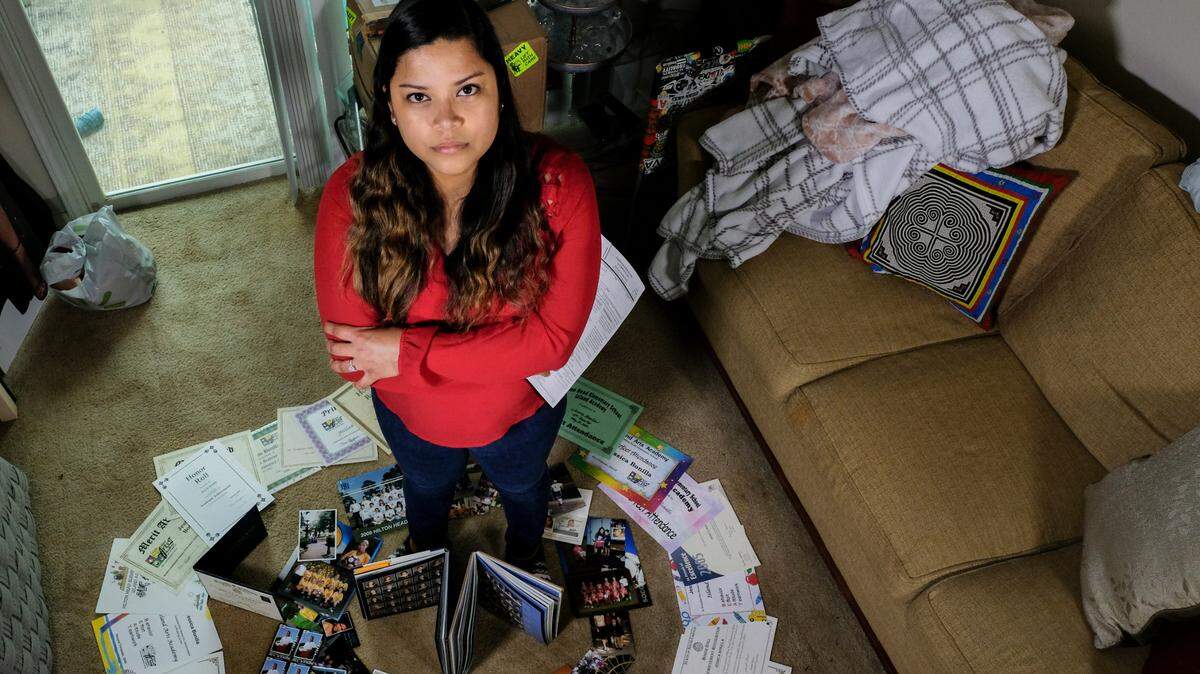
Gonzales also navigates systems many parents never have to. Her daughter is set to graduate from Bluffton High School this year, but has been turned away from vocational programs because of issues with her immigration status that are slowly being resolved. In the meantime, she faces impossible college tuition bills because she’s ineligible for state aid her peers will receive.
”In other states, I feel it’s less complicated … They give more possibilities to study,” she said.
And she’s right. South Carolina’s laws are some of the most restrictive in the nation when it comes to scholarships and career opportunities for childhood immigrants lacking citizenship or permanent residency.
Some Hispanic families have to overcome these challenges alone.
After years as a Beaufort County schools parent, Gonzales acknowledges it’s rare to see Hispanics and Latinos involved at school or represented at school board meetings. “In this sense, school administrators should try to include Hispanic parents more,” she said.
“If they ... extended a cordial invitation, I think even though Hispanic parents work a lot, they would try to make time to involve themselves in their children’s school.”
Maria
In second and third grade, Maria Lopez tried everything to help her son.
“I was going to behavior therapy, I was giving medicine, I was taking him to soccer so he would tire himself out ... so that he would stay in his seat (at school),” she said.
But he couldn’t concentrate. He had ADHD, Lopez was told, and fell below grade level.
Lopez, a Mexican immigrant and mother of three, even attended a program at Hilton Head Elementary School aimed at helping Hispanic parents coach their children through reading assignments.
The organizers, teachers and interpreters from the school, prepared an auditorium for the first session, but just five mothers showed up, Lopez remembered. She thinks some parents were afraid to go, assuming it would only be in English, and others had to work.
By the third session, the group was down to two. Lopez was one of them. She learned strategies she took back to her bilingual home in the evenings: How to ask questions about the books he was reading, even if they were too complicated for her to understand, and how to follow along with a version translated into Spanish.
It was during the COVID lockdown, when school moved to video chat and she stayed at home taking care of her two young daughters on the island’s north end, that something clicked for Lopez’s son.
One of his 4th grade teachers gave him a “big push,” she said, staying after class to chat with him on Zoom. Afterward, her son asked her a thousand questions, demanding to watch science experiments on Youtube.
When one of his own earned him a 3rd place prize in a school science competition, he was thrilled.
That teacher “found the way my son liked to be in school, the way he liked to involve himself in his homework that I’d never seen,” Lopez said.
“I saw him shine,” said Lopez.
This story was originally published August 31, 2021 at 5:00 AM with the headline "‘I saw him shine.’ How SC’s Lowcountry has evolved, through the eyes of immigrant moms."