Rice’s impeach vote to battle over masks: Here are top 10 SC political stories of 2021
South Carolina had no shortage of news this year, from a January impeachment vote that has since made one congressman a primary target to a power shift in the state Senate after the death of the state’s most powerful legislator.
South Carolina politics and government-related news was ablaze throughout 2021.
Here are the top 10 biggest news stories in the Palmetto State in 2021 — moments that could play a pivotal role in 2022 and beyond.
10. Governor exits 2021 with no real challenger
Gov. Henry McMaster will walk into 2022 with no real high-profile challenger as he campaigns for a second term, a term that if he wins will make him South Carolina’s longest-serving governor.
The Columbia Republican appears to have primary challengers, but they so far have amassed a small portion of the war chest that the governor has been able to raise.
McMaster’s also been able to run fundraising circles around his Democratic opponents: former U.S. Rep. Joe Cunningham, state Sen. Mia McLeod and Democratic activist Gary Votour.
He ended the third quarter with $3.5 million in the bank, trouncing Cunningham’s haul of $1 million and McLeod’s $275,000.
Earlier this year, rumors were Senate Majority Leader Shane Massey, R-Edgefield, and McMaster’s 2018 runoff opponent, John Warren, planned to challenge him in a primary. Massey is not running, and so far Warren has been mum on gubernatorial plans. He did, however, launch a Bitcoin venture this month and said his political action committee will play a large role in 2022 midterm races, including in the House and superintendent of education races.
9. SC’s flagship university embroiled in presidential search, again
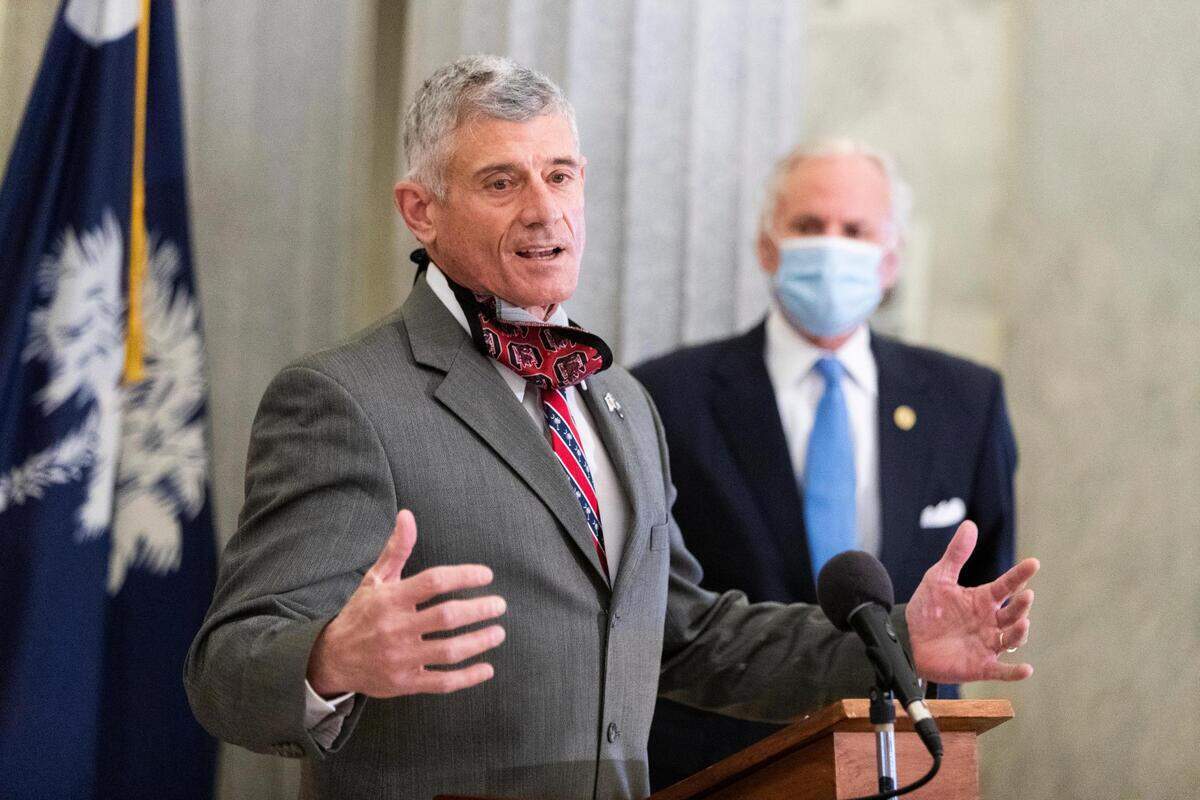
After former University of South Carolina President Robert Caslen made an unceremonious exit in May following a plagiarism scandal, the university’s board embarked on what’s become a monthslong search for the next person to head the state’s flagship college.
Seven months later, the search has not been fruitful, mired by frustration among elected officials and internal search committee turmoil.
In early December, the university named their favorite to replace Caslen. That candidate promptly dropped out of the race. For now, former USC President Harris Pastides is at the helm, but board officials are expected to choose a new president in early 2022.
The last presidential search was clouded by controversy.
Then, critics pounced on the governor — an ex officio board chair — and his office for pressuring the board to choose Caslen, potentially threatening the university’s accreditation.
Though the Southern Association of Colleges and Schools said they found “adequate evidence of undue influence from the governor during the presidential selection process,” the university avoided official sanctions.
8. Legislature tries to restart executions
South Carolina lawmakers passed a bill this year that could restart executions across the state for the first time in a decade.
The bill, which makes the electric chair the primary method of execution and adds a firing squad option, fixes a portion of the law that allowed inmates to avoid execution by choosing to die by lethal injection. Because lethal injection drugs are not available, that created a de facto moratorium on executions.
Under the new law, South Carolina officials can put an inmate to death via the electric chair if the lethal injection drugs were not available.
Corrections officials quickly scheduled executions in June, but a last-minute court decision stopped them.
A court decided that all executions will be stayed until the state can offer at least one other method of execution, either firing squad or lethal injection.

7. High court overturns key measure of Heritage Act
The state Supreme Court ruled in September that a portion of the Heritage Act, a more than 20-year-old law that restricts changes to certain names, statues and monuments, is unconstitutional.
In its decision, the court struck down the portion of the law that required a supermajority vote in the Legislature to make changes or take down the historical markers, statues or monuments. Lawmakers now need a simple majority.
Justices did, however, uphold another portion of the law requiring local governments to get permission from the Legislature to change historic names and monuments.
Opponents of the law — put in place after lawmakers took the Confederate flag down from atop the Capitol and moved it to the grounds — have pushed the Legislature to eliminate the measure completely, saying it protects some of the state’s most controversial and racist figures.
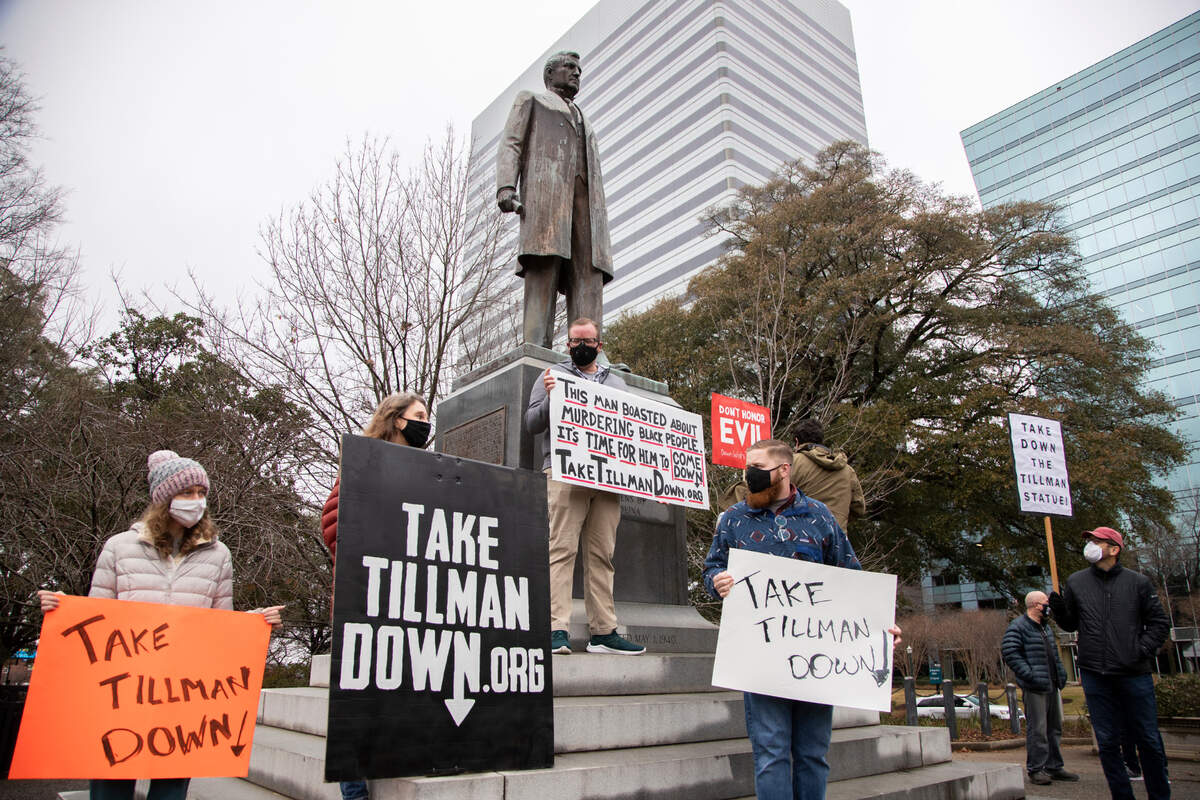
For example, at least two universities — Clemson and Winthrop — have asked lawmakers for their OK to remove former Gov. Ben Tillman’s name from buildings. Tillman was a white supremacist, who defended lynching and opposed civil rights for Black Americans.
Tillman’s statue also sits on the State House complex.
State House leaders have not been keen to debate the Heritage Act. House Speaker Jay Lucas, R-Darlington, has been open in his opposition for years, and, earlier this year, vowed to not take up changes to monuments in the House. Senate Majority Leader Shane Massey, R-Edgfield, predicted it would not get much traction.
6. McMaster signs restrictive abortion ban
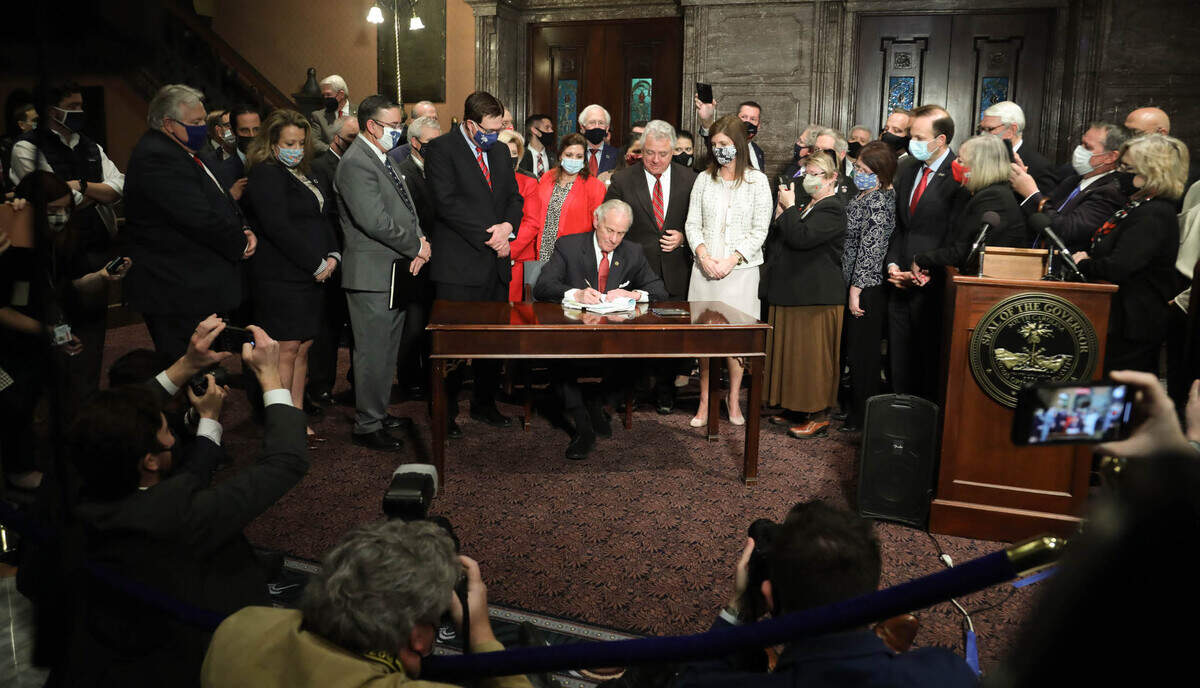
The first major piece of legislation lawmakers passed this year after Republicans expanded their majority was S. 1, a bill that seeks to ban most abortions after the fetus’ heartbeat is detected, at about six weeks.
The bill was pushed through the legislative process in just a few weeks. McMaster signed it into law in mid-February. However, a court quickly issued an injunction to keep the bill from taking effect, and it’s been on pause ever sine, pending a decision from the U.S. Supreme Court.
That decision is expected as soon as next year.
In the last month, the nation’s top court has taken up two major cases concerning abortion: One that examined Texas’ law allowing anyone to sue someone suspected of giving or receiving an abortion and another in Mississippi banning abortions after 15 weeks.
In the Texas case, the court ruled it can start, but opened a path for abortion providers to sue to block it later.
5. Columbia elects new mayor
South Carolina’s capital city elected a new mayor in November.
Columbia Mayor Steve Benjamin, the city’s first Black mayor, announced in February that he was not going to seek reelection.
Immediately after Benjamin’s announcement, several hopefuls tossed their hats into the race, including city council members Tamika Isaac Devine and Daniel Rickenmann.
Rickenmann later secured a victory in a runoff race against Devine by a vote of 10,550 votes (52%) to 9,751 (48%).
Rickenmann’s election is a major change for Columbia city politics, which has been dominated by Democrats for more than 30 years. Rickenmann, a businessman, is a Republican, though the race was nonpartisan.
4. State, local officials square off over masks
One of the biggest political fights that dominated months of 2021 was over whether schools should be allowed to require that their students wear masks as they returned to in-person classes.
The battle began after lawmakers added a provision to the state budget meant to ban schools from issuing mask mandates in June. As the school year neared and COVID-19 cases began to rise again across the state, some local officials pushed back.
In August, Columbia, along with other areas across the state, issued mask mandates for public schools — a requirement supported by Education Superintendent Molly Spearman. The U.S. Department of Education also opened an investigation into South Carolina and whether its mask rule violated the civil rights of students with disabilities who are at heightened risk for severe illness caused by COVID-19.
In the end, a number of civil rights groups representing South Carolina families with children at severe risk of serious disease due to COVID-19 filed a lawsuit claiming they were made to choose between their children’s health and their education.
A federal judge agreed, blocking the budget proviso and allowing schools to issue mask requirements.
The fight over COVID-related mandates is likely not over.
Lawmakers have filed a bevy of bills aimed at stopping mask and vaccine mandates across the state. One bill, which aims to ban public employers from enforcing vaccine mandates passed the House.
3. Senate loses a giant
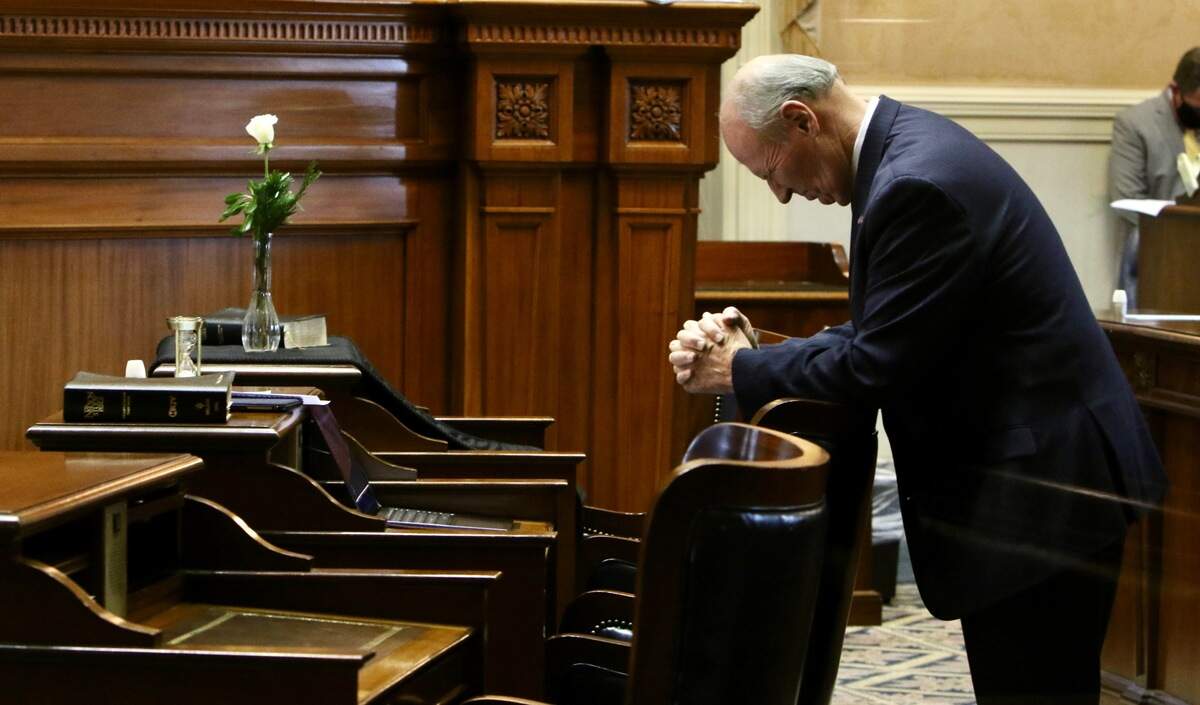
State Sen. Hugh Leatherman, considered the most powerful state lawmaker who served in the Senate for 41 years and ran the Senate Finance Committee for roughly 20 years, died in mid-November of a non-COVID-related illness.
He was 90.
Leatherman left behind what many considered a legacy of strength, compromise and a tremendous economic impact on the state of South Carolina. He was remembered and mourned by his colleagues and received eulogies in Congress.
Leatherman’s death resulted in a major shakeup in the Senate.
Senate President Harvey Peeler, R-Cherokee, resigned from his leadership position to take over as the Senate Finance Committee chairman, and Sen. Thomas Alexander, R-Oconee, was elected to lead the chamber. Both senators hail from the Upstate.
The musical chairs left state Sen. Tom Davis, R-Beaufort, to take over as chairman of the chamber’s Labor, Commerce and Industry Committee.
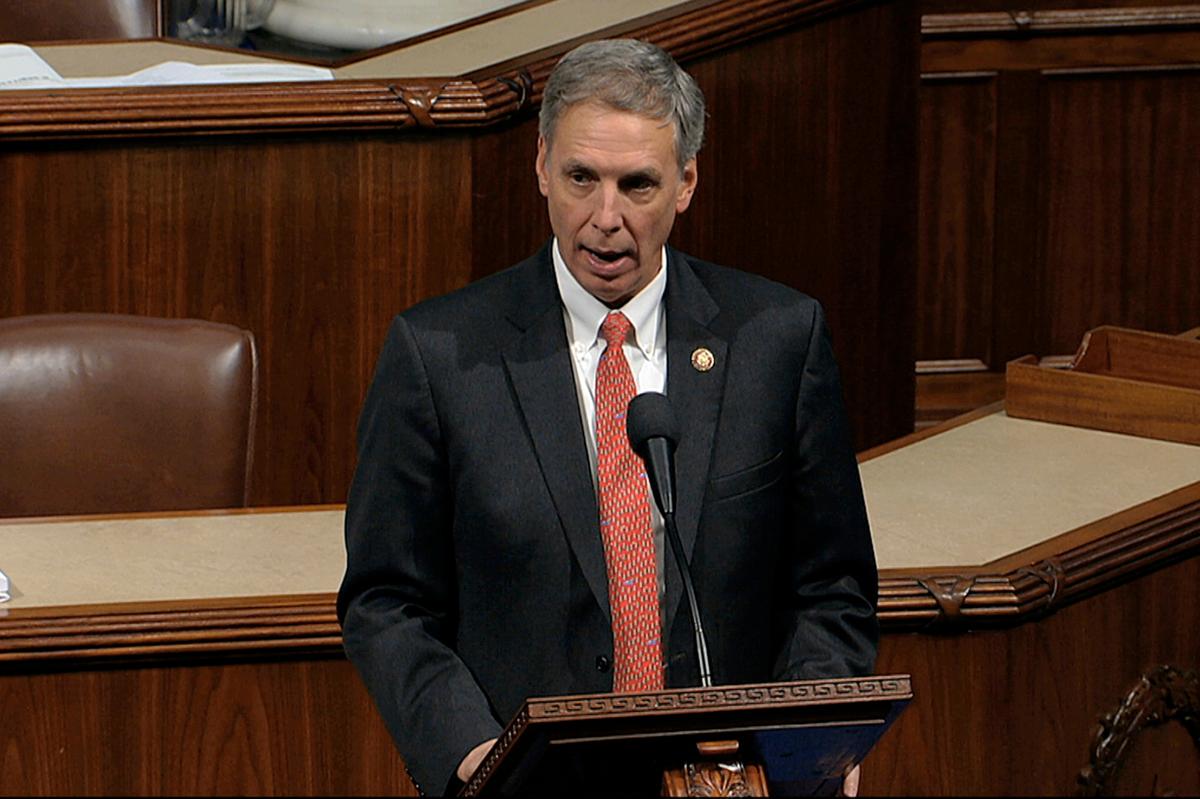
2. Tom Rice shocks SC, votes to impeach Trump
Following the Jan. 6 riot at the U.S. Capitol, Congress voted to impeach then-President Donald Trump for the second time. .
Ten Republicans joined their Democratic colleagues, including U.S. Rep. Tom Rice, shocking most in South Carolina.
In a statement, the Myrtle Beach Republican said that Trump’s actions ahead of the riot and the way he handled it during and after was an “utter failure” and “inexcusable.”
Recently, Rice told Politico that he regrets casting the vote against certifying President Joe Biden’s 2020 election victory.
“In retrospect I should have voted to certify,” Rice told the outlet. “Because President Trump was responsible for the attack on the Capitol.
The effects of Rice’s vote have been well documented throughout the Pee Dee region this year. Challengers have lined up to take on the incumbent, with some saying they tossed their hat into the race because of the impeachment vote.
State Rep. Russell Fry, R-Horry, is among Rice’s challengers.
1. SC lawmakers draw new voting maps
The most monumental change in South Carolina came at the end of the year in the once-in-a-decade redraw of the state’s district maps, otherwise known as redistricting.
After a summer of taking public testimony, lawmakers returned to Columbia in December to finalize the state House, state Senate and congressional district maps, which will be in use for the next 10 years.
Richland County — home of the capital city — will lose a House seat under the plan adopted earlier this month.
Under the House plan, Districts 70 and 80 in lower Richland County will be consolidated, lining up a potential battle between Reps. Wendy Brawley and Jermaine Johnson come next year’s Democratic primary.
The Senate plan, meanwhile, nixes Sen. Dick Harpootlian’s downtown Columbia seat, moving it to Charleston, but brings two districts into Richland County and guarantees the county an additional resident senator.
Overall, both new maps are expected to help Republicans retain, if not expand their power in the State House during the coming years.
Lawmakers didn’t get around to adopting a final congressional map, but a proposed map would strengthen Republican’s hold on the First District, which is currently held by U.S. Rep. Nancy Mace, R-Daniel Island.
HONORABLE MENTIONS
▪ Embattled Department of Juvenile Justice Director Freddie Pough resigns after scrutiny from state lawmakers
▪McMaster signs a bill allowing holders of concealed carry weapons permits to openly carry their handguns
▪ McMaster signs a bill allowing college athletes to get paid for the use of their name, image and likeness
▪ Atlanta attorney Lin Wood disrupts state Republican Party chairman race, but in the end loses to Chairman Drew McKissick
▪ Nikki Haley tangles with Trump, says she won’t run for president in 2024 if he does
Reporters Joseph Bustos and Zak Koeske contributed to this report.