SC Republican sent $325K in taxpayer money to nonprofit run by friend, political ally
READ MORE
Hidden Earmarks
How millions in your state tax dollars are secretly spent each year.
Expand All
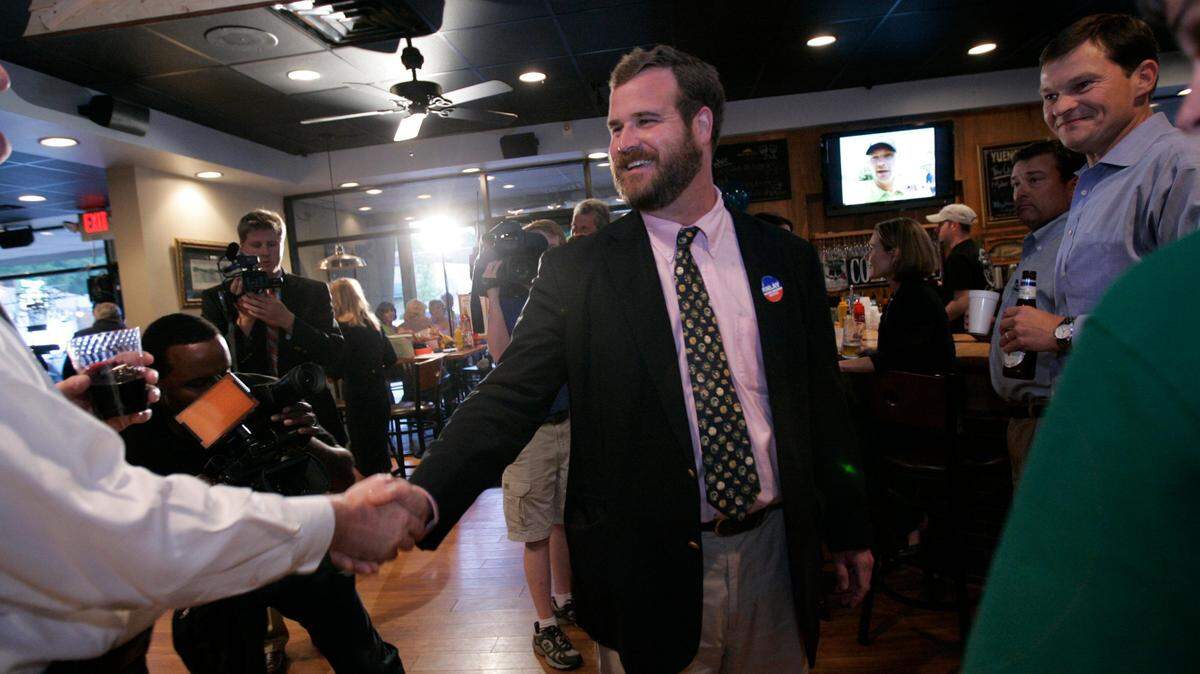
Rep. Kirkman Finlay, R-Richland, directed $325,000 in taxpayer dollars over three years to a nonprofit founded by his family members and run by his friend and close political associate.
Some of the money paid a fellow Richland County Republican who formerly served in the S.C. House of Representatives.
It’s the latest example of an S.C. lawmaker funneling money to a pet cause through “hidden earmarks,” an unaccountable practice that must be made transparent, say government watchdogs and some lawmakers.
“What you got is a bunch of people doing business the old fashioned way, and big doggin’ it with state funds quietly and secretly,” said John Freeman, an ethics professor emeritus at the University of South Carolina School of Law.
Finlay — who sits on the House Ways and Means Committee that helps craft the state budget — sent the earmarked money to the Palmetto Center for Policy Alternatives, a Columbia nonprofit with a vague mission that makes it difficult to determine what its purpose is. Finlay said he teams up with the nonprofit each year for charitable giveaways, including a scholarship program for low-income college students.
But the nonprofit also serves as a back door for Finlay to direct taxpayer dollars to a completely different cause, unknown to most. It pays a fellow Richland County Republican, former Rep. Joan Brady, to promote a once-controversial vaccine that was fiercely opposed by social conservatives and religious groups in the early 2000s. Finlay’s $325,000 in earmarks — and another $280,000 in budget provisions — have bankrolled Brady’s work for the past six years.
Exactly how the money was spent remains a mystery. The state agency that wrote the checks to the nonprofit doesn’t know and the nonprofit would not provide financial information to reporters.
The Palmetto Center isn’t the only organization receiving taxpayers’ dollars with little accountability or transparency.
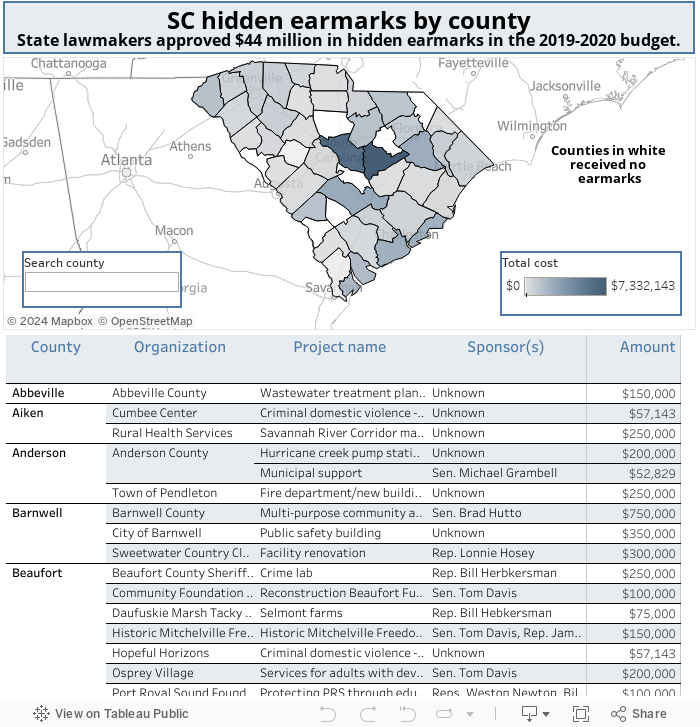
For more than a year, a team of reporters at The State Media Co. and The Island Packet has investigated the secret world of earmarks, revealing that at least $104 million in earmarks has been included in the state budget since 2015, then disbursed to various pet projects around the state by lawmakers on both sides of the political aisle.
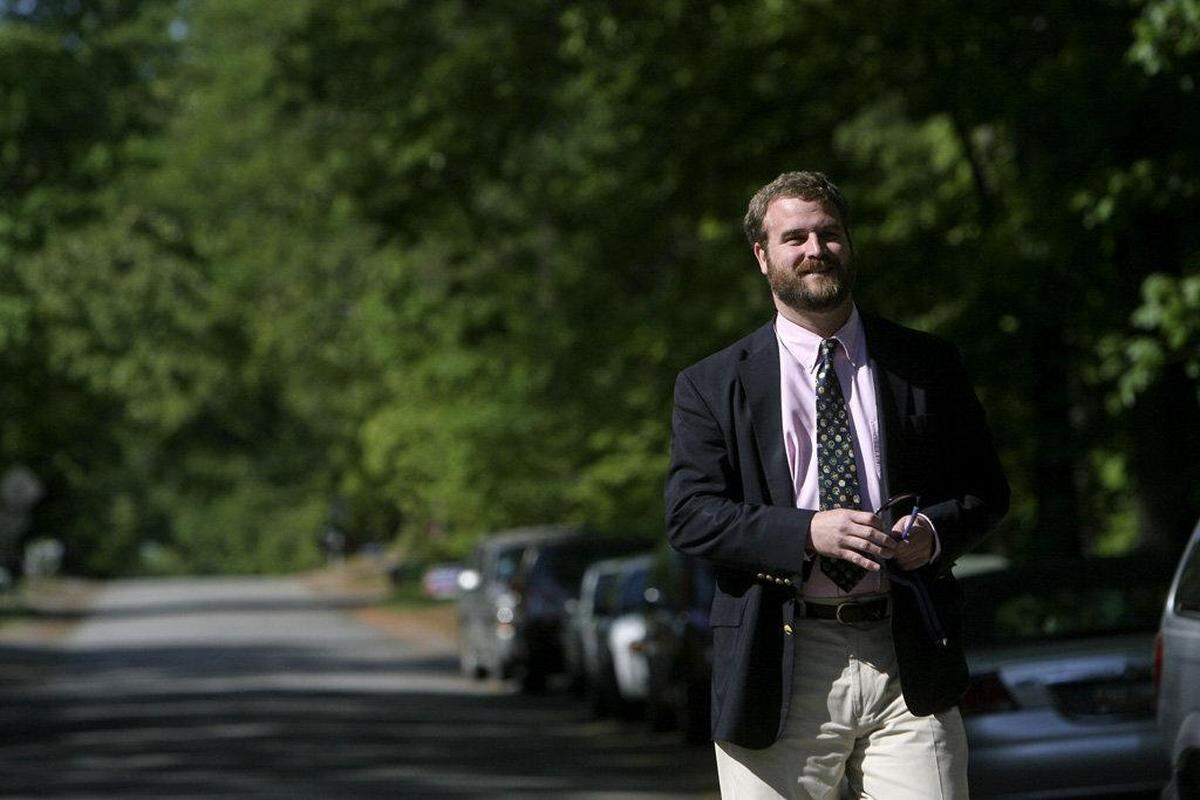
In new reporting by the newspapers, Finlay and Rep. Todd Rutherford, another Richland County lawmaker who is a Democrat, steered earmarks to those close to them.
The newspapers’ findings are raising a new round of concerns among ethicists and good-government advocates who say the state’s earmark process, combined with its weak ethics laws, are working hand-in-hand to hurt taxpayers.
“The choice (to fund these groups) ought to be made on the merits (of a program) rather than on the connections that people have,” said Daniel Wueste, a Clemson University professor and authority on professional ethics. “That makes it sound like you’re going to visit the Godfather.”
Finlay, a Columbia farmer and restaurateur who was narrowly re-elected in November by a margin of just 257 votes, defends the payments.
“I have no problem standing up and saying, ‘These are what I’m pushing money for,’” Finlay said. “If I’m willing to defend it and openly acknowledge it, there’s nothing hidden about it.”
None of the earmarks appear to violate the state’s ethics laws, according to the papers’ review.
Family nonprofit gets state funding
Since 2014, Finlay has sponsored three earmarks totaling $325,000 for the Palmetto Center, whose founders include his mother, his uncle and a longtime campaign donor, according to records obtained by the newspapers.
These payouts are listed in the state budget as “medical contracts” for the S.C. Department of Health and Human Services, one of several state agencies where lawmakers routinely stash earmarks until they’re paid out to recipients.
In 2018, the nonprofit’s funding switched from earmarks to provisos, one-time budget line items that offer more specificity on how money is to be spent. To date, $280,000 — listed as “cervical cancer awareness” — has gone to the organization via these provisos, which Finlay voted in support of each time.
But the Palmetto Center’s mission statement says nothing about cancer advocacy. It aims to improve the “economic vitality” of South Carolina by encouraging civic engagement and “improving responsiveness and accountability of elected officials,” according to its website.
Its executive director is Finlay’s longtime friend and political consultant Steven Fooshe, a State House lobbyist whose firm has been paid more than $100,000 from Finlay’s campaign for a variety of services since 2018, according to filings. Fooshe isn’t paid by the nonprofit, according to tax forms, but the lobbyist said he receives a small stipend, though he refused to say how much it is.
Fooshe’s compensation does not appear to break any rules. S.C. ethics laws only bar lawmakers from acting in ways that financially benefit themselves, certain family members and business associates.
Finlay said he collaborates with the nonprofit to run an annual “Back to School Bash” with school supply giveaways for children in and around his district, as well as a scholarship program named in honor of his father, the late Columbia Mayor Kirkman Finlay Jr.
There is no “nefarious plot,” Finlay said. “We’re just out doing good in the community.”
Beyond those two charitable initiatives, the lawmaker said he is not involved in the nonprofit’s operations. Finlay, who ran on ethics reform and budgetary oversight as pillars of his reelection campaign, deflected questions about whether he disclosed his ties to the nonprofit before directing hundreds of thousands in earmarked funds its way.
His family members have not been involved with the Palmetto Center for years, he said.
Among the group’s founders are Finlay’s mother, Mary Fleming Finlay, a retired biology professor, five-time Finlay campaign donor William Boyd and Gayle Averyt, a former insurance executive married to Finlay’s aunt, according to the center’s website.
“No one benefits financially that I’m aware of,” Finlay said. “I think this group does wonderful public work. I’ve donated to it myself.”
Tax forms show the nonprofit spent at least $473,915 on unspecified programs since 2011 to “increase awareness and participation in public policy.” The bulk of its expenses are directed to “professional fees and other payments to independent contractors,” who are not disclosed on the filings. Fooshe refused to name paid contractors when asked.
The organization was set up to be “flexible” with the causes it chooses to support, he said.
“If somebody comes and needs help with an idea, we can help them,” he added.
The nonprofit’s board of directors, according to its website and tax forms, is made up of four people.
One of the board members listed is Bruce Loveless, who initially told the newspaper he didn’t recognize the nonprofit’s name and wasn’t on the board. He went on to tell a reporter that he had attended just one of the group’s meetings and hadn’t been involved for some time, referring to the group as “Kirkman Finlay’s foundation.”
Fooshe said he may not have been “appropriately informed” of Loveless’ departure, but noted the group doesn’t regularly meet, saying, “We meet when we need to.”
Promoting a once-controversial vaccine
The nonprofit’s largest initiative appears to be a public campaign promoting the vaccine for the human papillomavirus, or HPV, a sexually transmitted infection that can cause cervical and other types of cancer.
The project, titled the S.C. Cervical Cancer Awareness Initiative, doesn’t appear anywhere on the Palmetto Center’s website or tax forms. Fooshe is listed on the SCCCAI website, but it’s unclear in what capacity and how they are connected.
The cervical cancer program is run by former Rep. Joan Brady, R-Richland, who, as a legislator, fought unsuccessfully to require all seventh-grade girls to receive the then-newly approved vaccine against HPV. The effort was defeated by socially conservative opponents who said the measure would promote teenage promiscuity and others who argued the policy should be led by the state health agency, not the legislature.
The newspapers’ findings — that state money is quietly flowing to the vaccine’s promotion — rankled leaders of some of those groups.
“To do that through a backdoor channel lacks integrity,” said Tony Beam, director of public policy for the S.C. Baptist Convention, which advocates abstinence outside of marriage. “I think it’s an end-run around the will of the people.”
Beam and Dave Wilson, the executive director of a conservative Christian think-tank, the Palmetto Family Council, which also previously opposed the vaccine mandate, called for greater openness in how public money is spent.
“We need transparency in how dollars are being spent and who’s receiving them because we’re hard-working taxpayers in South Carolina and those dollars need to be tracked,” Wilson said, adding he supports cancer prevention advocacy, but would like to see groups funded on their merits.
A bill allowing public health officials to offer optional vaccination to seventh graders passed the General Assembly in 2016, four years after Brady left office. It is still not a requirement as Brady’s original bill stated.
The budget for Brady’s salary as project director at SCCCAI appears to have been somewhere between $30,000 and $53,000 a year, according to budget documents provided by two state agencies, which reflect only three of the five years it received state funding. (DHHS did not have any other documentation of how the remaining $200,000 it paid out to the group was to be spent.)
Despite numerous requests, Fooshe did not provide a financial breakdown, detailing how the funds were used, and would not say the amount Brady and others were paid.
“This has been Joan’s cause while she was in the Legislature,” he said. “She was in the House when we started the project.”
Ethicists raised concerns about the roundabout funding.
“It didn’t win in a competition on the basis of how good its cause is, or how well the nonprofit is run,” said Wueste, the Clemson professor who teaches political philosophy and ethics. “It got the money because it was an inside track, an inside deal.”
Brady, who owns her own lobbying and marketing firm, declined an interview and did not answer questions sent via email regarding the use of the funding.
Through Fooshe, she provided a two-page summary of SCCCAI’s work, which lists “paid media promotions,” visits to state universities, documentary showings and the production of informational fact sheets and video interviews, which are available on the group’s website.
Brady’s organization isn’t the only one doing this work. Two state agencies already dedicate taxpayer dollars to education and advocacy focused on upping the Palmetto State’s HPV vaccination rates.
Taxpayers are the ultimate losers
It’s practically impossible for taxpayers to find out about earmarks, the lawmakers who requested them or the organizations that receive them. No publicly available list of earmarks exists.
Reporters were only able to identify Finlay’s earmarks because his name was found on one internal DHHS document. With no disclosures or applications bearing his name, citizens and fellow lawmakers are likely unaware of his connections to the nonprofit, or that he requested it receive money.
There has been some movement to make earmarks more transparent and traceable.
In January, the Senate adopted a new rule, requiring public disclosure of lawmakers’ earmark requests, including an explanation of how the money would be used. The House, where Finlay serves, is not following a similar rule.
When lawmakers don’t act transparently, “you raise suspicions, and the suspicions ... on the face of it appear to be justified,” said Wueste, the ethics professor.
On Jan. 8, Gov. Henry McMaster called on lawmakers to end “undisclosed ‘pork barrel’ earmarks” in his executive budget for the upcoming fiscal year, saying the practice “undermines the public’s trust and confidence in their government” and that projects should be selected on their merits and face open scrutiny. He has vetoed hidden earmarks each year he has been in office and has proposed organizations go through a grant selection process, a move lawmakers have rejected.
Sen. Dick Harpootlian, a Columbia Democrat and perhaps the most vocal critic of hidden earmarks, says McMaster still deserves a share of the blame for money being doled out, calling the governor’s past earmark vetoes “for show” and a “scam.” McMaster, he said, could direct state agencies not to write the checks to earmark recipients, stopping the corrupt process in its tracks.
A spokesman for the governor’s office, however, said the General Assembly is the appropriating body of public funds and the executive branch has no authority under state law to override those decisions.
But it’s not just McMaster to blame, Harpootlian added.
“This is not the CIA. (Making earmarks transparent) is not ... a risk to national security,“ Harpootlian said. “And many legislators ... may, in some instances, be helping their friends or their families. We don’t know. But it’s got to stop.”
This story was originally published March 2, 2021 at 5:00 AM.