SC school district spent $200K on out-of-state trips, including 5-day tour of London
READ MORE
Unchartered Territory
Unchartered Territory is an ongoing series by The State Media Co. about South Carolina’s changing charter school landscape
Expand All
Three dozen South Carolina travelers landed at London’s Heathrow Airport last year on a brisk April day and headed to their hotel.
Following a bag drop and a bite to eat, some of the group set out for the British Museum, while others boarded a double-decker tour bus to see the city’s sights.
Later that evening, several of the travelers popped over to a street market to browse its wares ahead of their dinner reservation at a traditional British pub.
The group, a collection of public charter school leaders and district employees, had journeyed overseas for the week to tour three high-performing British secondary schools and study their methods.
The five-day, four-night trip was one of at least 17 that employees of the Charter Institute at Erskine took between February 2023 and April 2024, an analysis by The State Media Co. found. The number of travelers per trip ranged from one to 36, records show.
While Charter Institute officials said private sponsorships covered all travel costs of London trip participants, a list of individual donors provided to The State accounted for only about one-third of the trip’s expense.
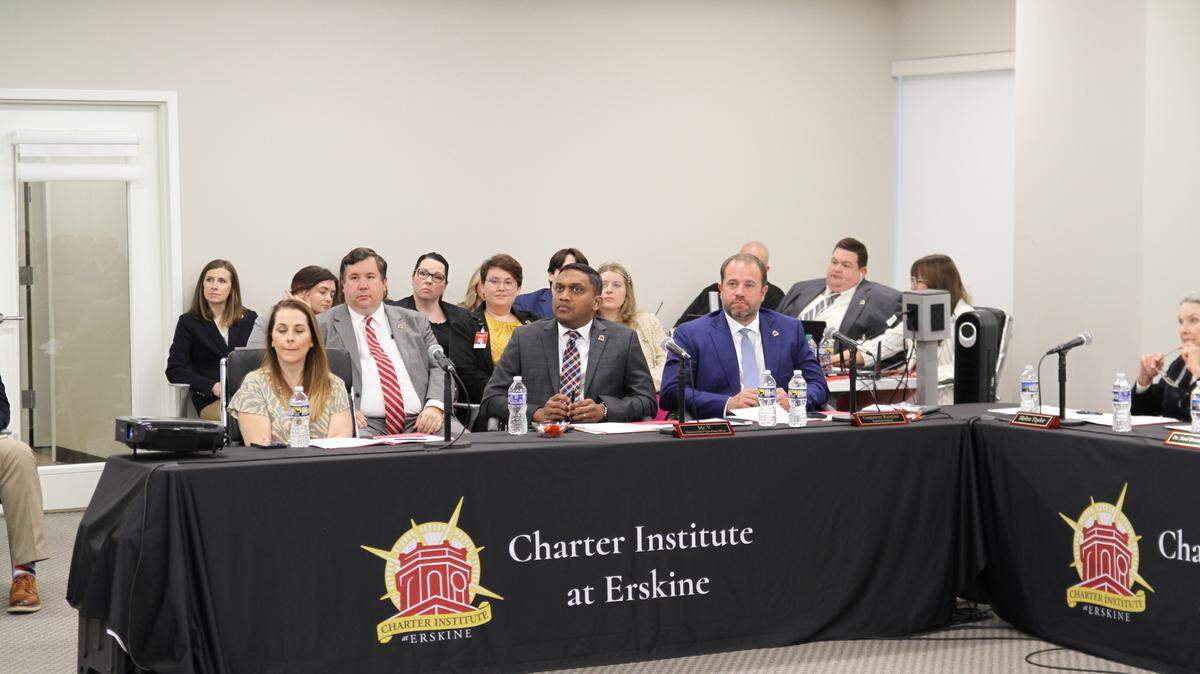
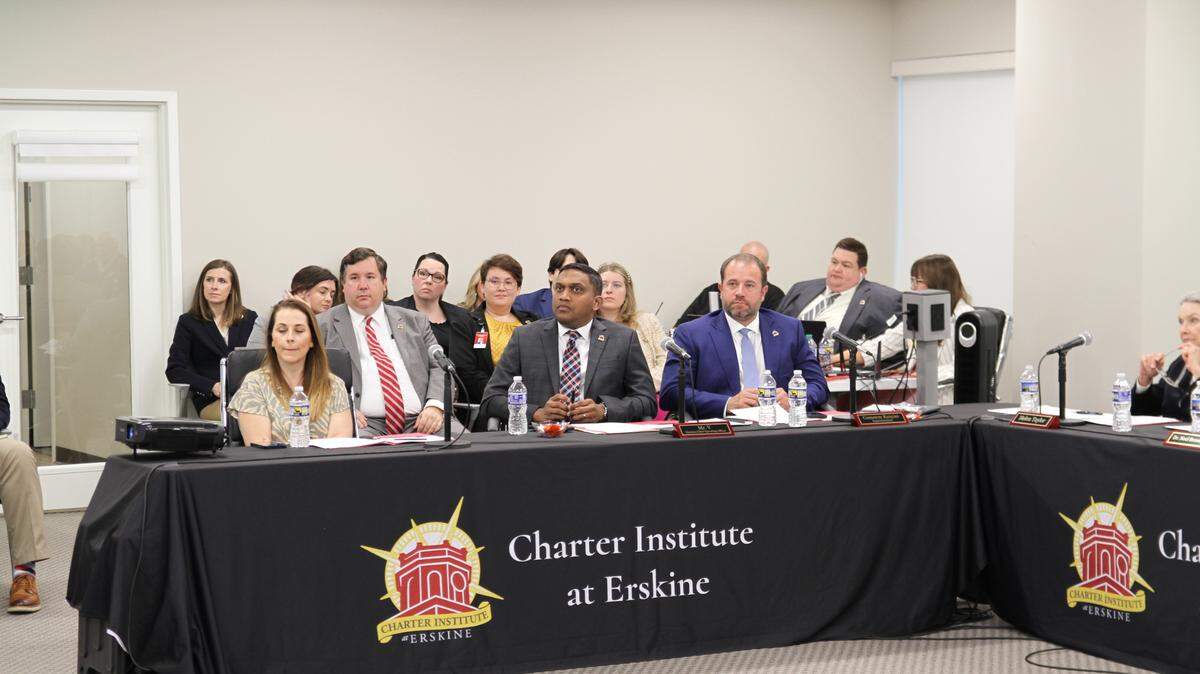
The institute, an affiliate of Erskine College, is one of three statewide organizations that receive taxpayer dollars to authorize new charter schools and oversee their operations.
The nearly $200,000 the district dropped on out-of-state trips during the period reviewed by The State, most of it public money, far exceeds the amount South Carolina’s other statewide charter school authorizers spent over the same span.
Popular with the employees and school leaders who take them, the Charter Institute’s trips are characteristic of the district’s unconventional — and sometimes controversial — approach to charter school sponsorship. The institute, which oversees 26 charter schools across the state, came under legislative scrutiny last year after reporting by The State raised questions about its spending, operations and ability to provide objective oversight of the schools it regulates.
The Charter Institute defends its approach and its use of taxpayer dollars.
Pushing boundaries, its leaders argue, is necessary to improve South Carolina’s underperforming public school system.
“We are 50th in education,” Charter Institute Chief Operating Officer Vamshi Rudrapati told The State. “Why should we do the same thing again and again when things are not working?”
Learning, ‘relationship building’ in London
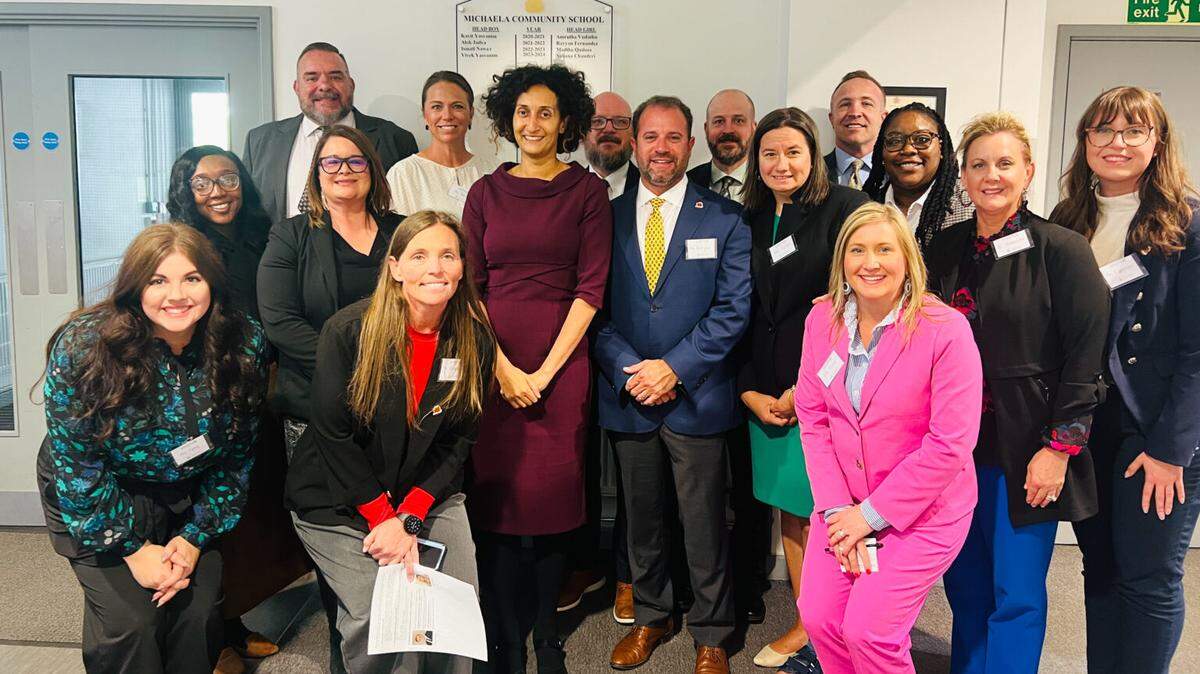
Twenty-four Charter Institute school leaders, seven district executives and five guests made the trip to London last April. (The travelers who brought guests reimbursed the district nearly $4,600 for their flight costs, receipts show).
On their first night, Charter Institute Chief of Staff Christy Junkins messaged the group to relay the itinerary for the following day.
They would trek to the Tower of London in the morning, visit Parliament in the afternoon, travel to Westminster Abbey for the Evensong service before dinner, and then, possibly, hit the London Eye afterward, she wrote.
The day, Junkins told them, was “all about relationship building.”
Documents show more than 16 hours of the trip’s itinerary were reserved for tourism, while only about 9 hours were set aside for the three mandatory school visits.
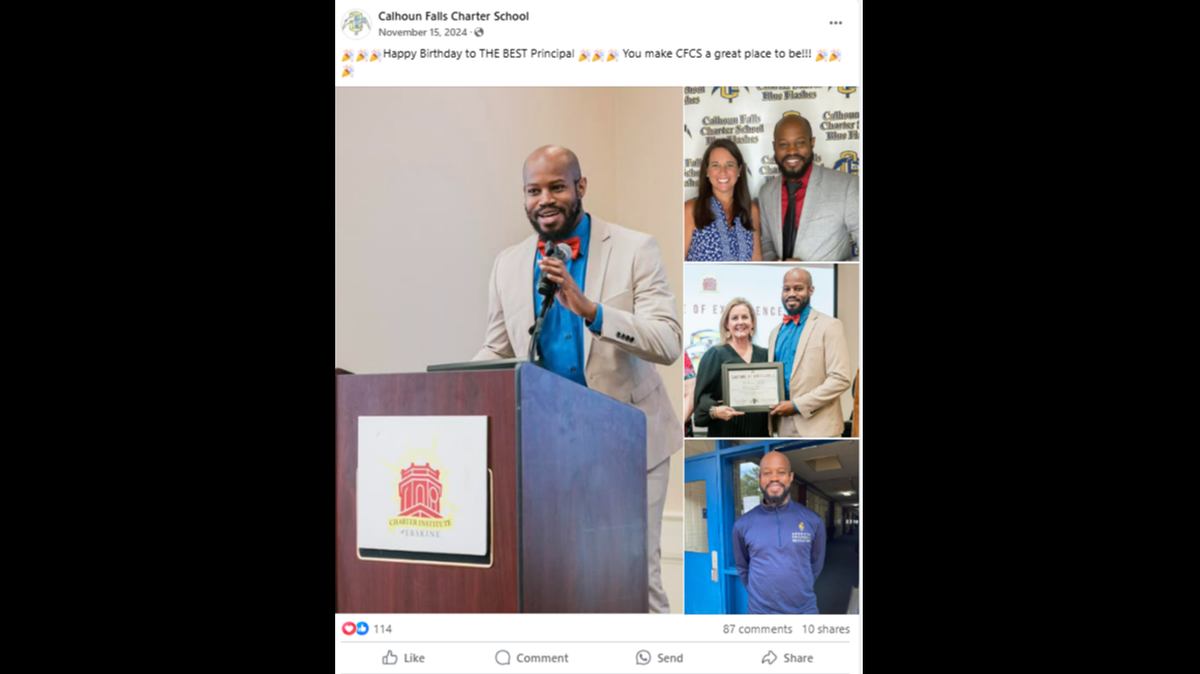
Michael Grimsley, a former assistant principal at Midlands STEM Charter School in Winnsboro who attended the trip, described the school visits as “amazing,” even life-changing, but questioned why more time wasn’t devoted to professional development.
“The trip itself was good,” he said, “but it was the ratio of how much work we did versus how much play we did.”
A self-described introvert who wasn’t especially close with any of his fellow travelers, Grimsley said he spent a good deal of time alone in his hotel room while small groups of his compatriots explored the city on the 3-day London Pass they were encouraged to purchase.
He said the trip, which took charter leaders out of their buildings for a week during the school year, could have been condensed to reduce the burden their absences placed on others back at their schools.
“Why did we need to be there for so many days to see only three schools?” said Grimsley, who now teaches band at a Sumter County middle school. “We could have seen more schools, or had a shorter trip.”
Charter Institute officials defended the length of their stay, arguing the downtime gave travelers a chance to bond and develop a level of comfort with one another.
The district didn’t schedule any school visits during the group’s first two days in the United Kingdom, Rudrapati said, to mitigate flight complications and forestall any lingering jet lag.
“That was a pure strategy decision,” he explained. “So if you miss a flight, if you miss anything, we are still able to stay on schedule.”
The trip’s $70,000 price tag, a Charter Institute lawyer claimed, was in line with the cost of “routine conferences or professional development.”
Traveling to London, district officials said, was cheaper than attending the South Carolina Association of School Administrators Innovative Ideas Institute, a popular multi-day professional development conference held annually in Myrtle Beach.
“(If) all those 30 individuals and the Institute go to SCASA, no one will ask a single question,” Rudrapati said.
A support system for charter school leaders
Three months before the Charter Institute’s London trip, many of the same travelers flew to Florida to tour several Miami-area charters, including SLAM! Miami, a sports-centric school founded by the rapper Pitbull.
“It’s the first time any authorizer in the (country) is doing something like this,” Rudrapati messaged the group, known as the Institute Leadership Cohort, ahead of the trip.
The cohort, launched in 2020, was born of a desire to support and offer guidance to overburdened school leaders while simultaneously preparing future leaders to step into similarly demanding roles.
Running a charter school “is not an easy job,” Rudrapati told The State. “It is a 12-, 13-, 14-hour (a day) job, because you’re doing marketing, hiring, firing, insurance.”
The high turnover rate among school leaders — the Charter Institute has lost 37 principals and assistant principals in just the past two years — justifies the cohort’s existence, he said.
“What we are trying to do is to save the sector,” said Rudrapati, who described the cohort as a “safe place” where leaders can turn for help and inspiration.
The group of about 30 school leaders remains in regular contact through a WhatsApp chat, attends occasional training sessions in Columbia and takes annual domestic and international trips throughout the school year.
Traveling outside of South Carolina is valuable, Charter Institute officials said, because it introduces school leaders to the cutting-edge approaches employed by top schools in other states and countries.
“South Carolina is low-performing nationally in education,” Charter Institute spokeswoman Ashley Epperson wrote in an email to The State. “How else can we learn other than to look outside (South Carolina’s) borders at those who are achieving excellence in other states?”
Jen Prince, a third-year assistant principal at Lowcountry Connections Academy in Summerville, said she couldn’t say enough good things about the leaders cohort.
“It’s fantastic,” said Prince, who has traveled with the group to Miami, London and Arizona. “The networking alone is amazing.”
The two cohort trips taken during the 15-month period reviewed by The State cost nearly $107,000, or more than 2 1/2 times what other statewide charter school authorizers spent on all out-of-state travel during the same period, records show.
The South Carolina Public Charter School District spent roughly $36,000 on out-of-state travel during those months, and the Limestone Charter Association racked up just under $42,000, records show.
Virtually all of the spending those two districts incurred was related to attending professional conferences.
The Charter Institute spent a comparable amount on professional conferences — roughly $38,000 — but professional development trips by the leaders cohort and another group of district employees known as the Breakfast Club account for the bulk of the district’s out-of-state travel spending.
The cohort’s next trip, scheduled for mid-March, will take members to Sweden, another European country known for its public education system.
Charter Institute officials confirmed the trip, but declined to disclose any information about it until a later date.
“As our Sweden trip is still in its planning stages, details of the trip are subject to change,” Epperson wrote in an emailed statement. “Therefore, we will not share any information, plans, or documentation at this time.”
A credit card statement posted on the Charter Institute’s website shows the district purchased more than two dozen flights to Stockholm, Sweden, in January at an average cost of roughly $1,350 per flight.
Questions swirl about trip sponsors
Charter Institute officials have asserted in a news release, in legislative testimony and in a legal threat directed at The State that private sponsors picked up the entire tab for the London trip.
Sponsorship records do not, however, support that contention.
According to donor information provided by Charter Institute officials, four trip sponsors contributed a combined $24,500, or roughly one-third of what officials charged to the district’s credit card for the trip.
When asked who paid for the remainder of the trip’s expenses, Epperson declined to answer, writing in an emailed statement that the district is private and raises money from private sources.
“We have been generous for nearly the past year in responding to your requests, but ultimately, we are not required to disclose or clarify this information for you,” she wrote.
The Charter Institute, a public charity as determined by the IRS, received more than $280 million in taxpayer support last year, according to the state’s revenue and fiscal affairs office. Most of that money is passed on to the individual schools the Charter Institute oversees, with the district retaining a small percentage in administrative fees to cover the cost of that oversight.
All four of the London trip’s known sponsors are charter school vendors that have worked closely with the district and some of its flagship schools.
Haskell, a Florida-based construction company that has built several Charter Institute schools, gave $20,000, or roughly 80% of the total amount raised.
Performance Charter School Development, an Idaho firm currently developing multiple Charter Institute schools, and two local law firms, White & Story and Atwater and Associates, each donated $1,500 for the trip, records show.
Haskell, Performance Charter School Development and White & Story, which does legal work for the Charter Institute, did not respond to requests for comment.
Todd Atwater, of Atwater and Associates, said he helped sponsor the trip because he felt like it was the right thing to do.
“Do you think they pressured me or that I had to do this?” said Atwater, a founding board member of the Charter Institute’s related nonprofit whose firm has served as legal counsel for American Leadership Academy Lexington and Belton Preparatory Academy in Anderson County, two of the district’s premier schools. “No, I was happy to do it.”
Three of the sponsors — all but Atwater — have also donated to the Kids First Conference, a two-day professional development event held jointly by the Charter Institute at Erskine and the Public Charter School District, according to district records.
The vendors’ donations are significant because lawmakers have raised questions about the Charter Institute’s relationship with the private companies that service its schools.
The state Legislative Audit Council last year launched an investigation into the district after lawmakers asked it to probe reports that companies interested in contracting with Charter Institute schools had invested in or made donations to the district or its parent institution, Erskine College.
Charter Institute executives denied any wrongdoing, asserting that accepting sponsorship money from vendors is commonplace in education and does not imply a promise of anything in return.
“It’s happening in every school district and every professional organization in the state of South Carolina,” Charter Institute CEO and Superintendent Cameron Runyan said.
Rudrapati, the district’s chief operating officer, added that while Charter Institute officials might introduce or refer school leaders to a vendor, they have never told a school to contract with a particular company.
“That is not our role,” he said.
District travel records show Runyan and Rudrapati visited Haskell’s Jacksonville, Florida, headquarters in August 2023, the same month the company finished construction on American Leadership Academy Lexington, a school Runyan and Atwater helped bring to South Carolina.
“I’m big on due diligence, so I like to go see people’s operations, see their capacity to deliver,” Runyan said of the Haskell visit. “Taxpayers are funding these schools. We need quality work, not fly-by-night stuff.”
About six weeks after the visit, Haskell broke ground on a new building for Belton Preparatory Academy, then operated by a for-profit management company later revealed to have been founded and co-owned by Erskine College.
Around the same time, Haskell gave $8,500 to the Charter Institute for its Kids First Conference, records show.
Haskell officials later met up with the Institute Leadership Cohort in Miami during its January 2024 professional development trip. The cohort had been scheduled to visit the construction company’s office, an itinerary shows, but Rudrapati said Haskell officials instead met up with the group in Midtown Miami while they were out shopping, a team building activity.
“They just showed up there to say ‘Hello,’ because we were there,” he said. “(Like) any business would do. Hey, you’re in Miami, let us come say ‘Hello.’”
Within a few months of the Miami trip, Haskell began construction on modular units for Willie Jeffries School of Excellence in Orangeburg, according to a contractor’s notice filed with the county’s register of deeds.
The Orangeburg school, which contracts with the Charter Institute for services and has received substantial financial and in-kind support from the district, is being built on land owned by Performance Charter School Development, another London trip sponsor.
This story was originally published February 28, 2025 at 5:30 AM.