Highly-paid principal of Midlands charter school has lucrative side job
READ MORE
Unchartered Territory
Unchartered Territory is an ongoing series by The State Media Co. about South Carolina’s changing charter school landscape
Expand All
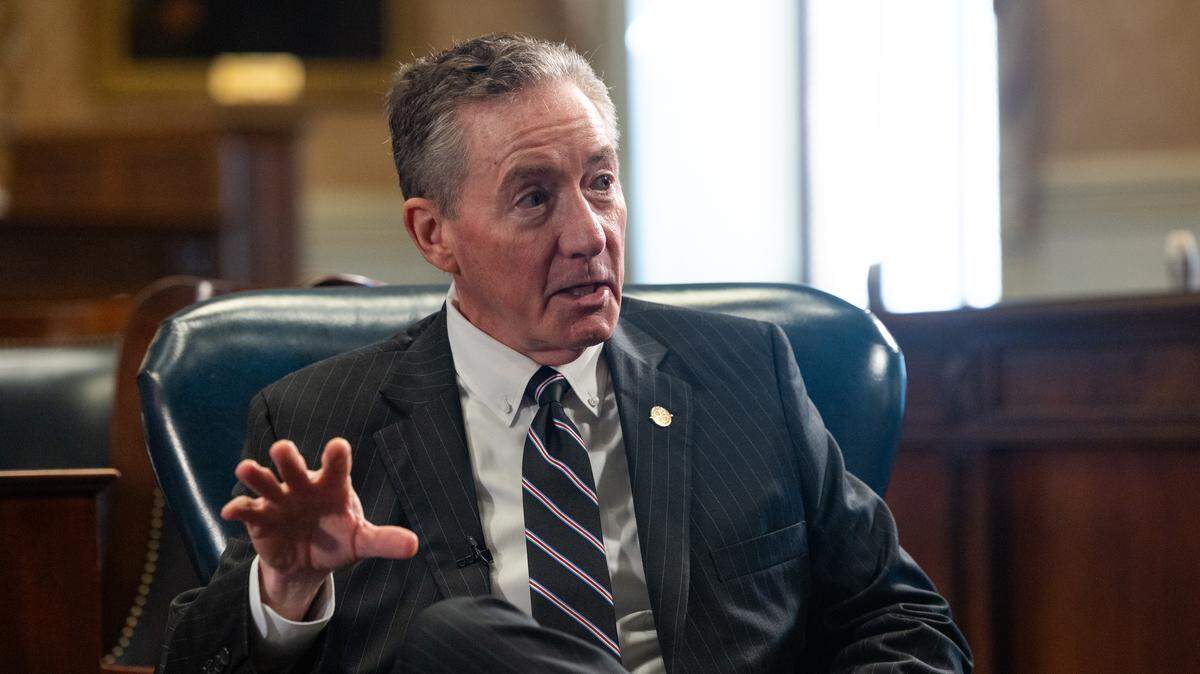
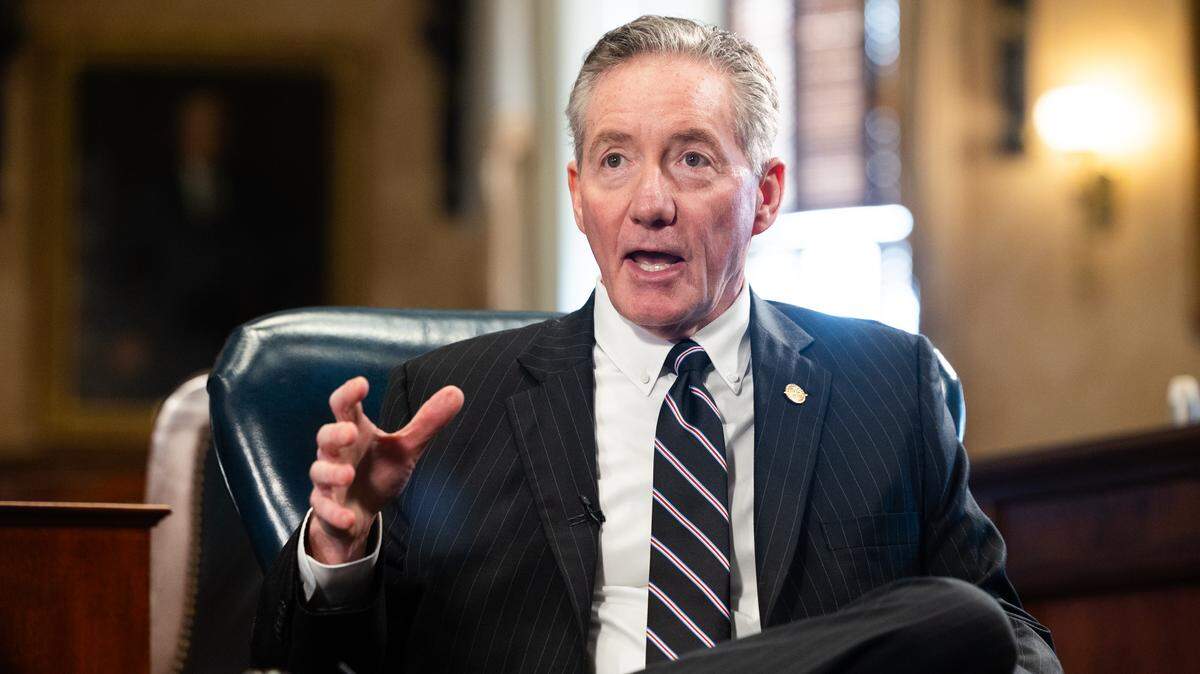
The principal of a prominent Midlands charter school moonlights as a consultant for the taxpayer-funded authorizer responsible for monitoring his school’s academic performance, legal compliance and stewardship of public dollars, documents show.
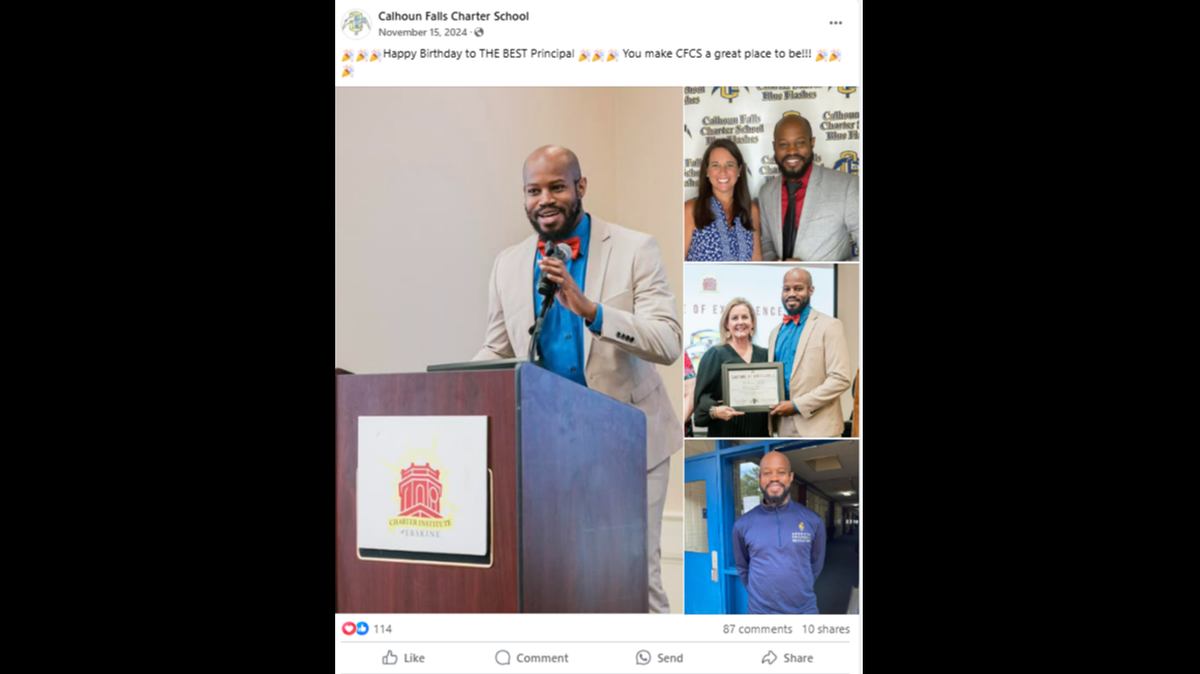
Brian Newsome, the principal of Gray Collegiate Academy in West Columbia, has been paid at least $160,000 by the Charter Institute at Erskine to advise his charter school peers and guide new charter school development, according to invoices obtained by The State Media Co.
The consulting relationship, which started in 2021, raises two potential issues of concern, said Derek Black, a law professor at the University of South Carolina.
For one, said Black, an expert in education law and policy, charter school authorizers have a fiduciary duty to the state to manage charters and hold them accountable.
“When you bring the people you’re going to be holding accountable inside your internal structure, it complicates that accountability,” he said.
Secondly, Newsome’s work helping to establish and support other charter schools, which can enroll students from anywhere in the state, would seem to run the risk of conflicting with his primary job as Gray’s principal.
“You wouldn’t normally allow someone to do consulting work to help competitors,” Black said.
While not illegal, the professor said the Charter Institute’s willingness to employ the principal of a school it regulates is further evidence that state lawmakers need to amend South Carolina’s charter schools law and add more guardrails to the lightly-regulated industry.
“This industry and the various people employed in it have taken the position that, effectively, they can do anything that isn’t specifically prohibited by law, even though any reasonable outside observer would say, that’s not right,” Black said.
Over the past two years, The State has documented numerous ways in which the private interests of charter school authorizers, such as the Charter Institute at Erskine, have come into conflict with their statutory oversight role.
In response, state lawmakers have asked an independent government watchdog to investigate whether the Charter Institute’s financial entanglements interfere with its regulatory duties or result in disparate treatment for some charter schools.
Newsome, whose $322,544 salary makes him one of the highest-paid public school employees in the state, did not respond to multiple requests for comment.
The principal has long been one of the Charter Institute’s star performers and leading ambassadors.
In Gray’s first year with the district, the authorizer named Newsome its “Champion of the Year,” an award given to the district’s top principal, and later appointed him to the board of Teach Right USA, its taxpayer-funded teacher training nonprofit.
He was brought on as a paid consultant in May 2021, records show.
According to Newsome’s $3,200-per-month consulting agreement, the Charter Institute — founded in 2017 by Erskine College — needed help supporting school leaders and improving their quality and effectiveness.
Newsome, the agreement said, possessed “unique and significant experience in the operation and leadership of sponsors similar to (the Charter Institute), specifically in the area of charter school leadership and administration.”
At the time, he had been the principal of Gray Collegiate for nearly five years, but had never worked for a sponsor or held any other charter sector job, according to his resume.
The Charter Institute, which oversees 28 schools across the state, declined to answer questions about the principal’s work for the district.
Consulting deal came after legal settlement
Newsome began consulting for the Charter Institute shortly after it settled a lawsuit with his school’s then-operator, Pinnacle Charter School Management Group.
Pinnacle, a Florida-based for-profit management company that operates three athletics-oriented charter high schools in South Carolina, had sued the Charter Institute, Gray Collegiate and their respective leaders in October 2020, alleging tortious interference, defamation and conspiracy.
The lawsuit accused Newsome, who at the time was a Pinnacle employee, of launching a campaign to stack Gray’s board with loyalists in an effort to displace the company and give himself more authority and control over the school.
The suit alleged the Charter Institute supported Newsome’s ambitions and had implied that Pinnacle was underpaying the principal and could lose him if it didn’t hike his salary.
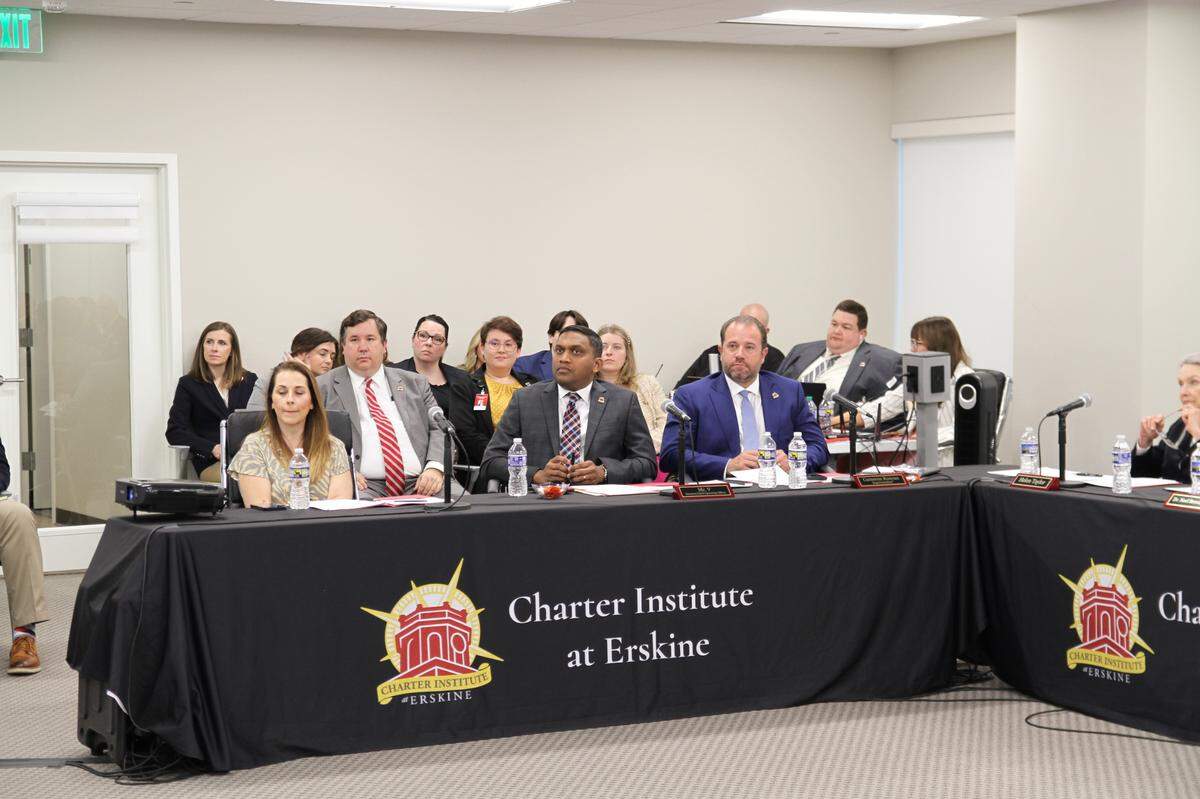
Tensions between the parties escalated after the Charter Institute accused the company in a legal notice of engaging in “suspected corrupt or fraudulent conduct” and “potential mismanagement of state and federal dollars.”
Pinnacle denied the charges, claiming they were levied in an attempt to damage the company’s reputation and “create a basis to separate from Pinnacle’s contracts.”
The parties resolved their legal dispute in February 2021, after which Gray’s board assumed ultimate authority and control of the school, but continued to pay Pinnacle for management services.
Less than three months after the settlement, Newsome joined the Charter Institute as a consultant.
Mike D’Angelo, Pinnacle’s CEO, said in a recent interview that Newsome did not request permission to consult for the Charter Institute and that he was not pleased upon learning about the arrangement.
“No one’s happy to find out that one of your employees is being a consultant for another group without even contacting the primary employer,” D’Angelo told The State.
Gray’s board amended its contract with Pinnacle that July to ensure that Newsome, and any future principal, would be employed by the board, not the management company, records show.
The board notified Pinnacle the following year that it would not renew its management contract with the company and the parties eventually parted ways.
It isn’t clear whether Newsome, whose salary has increased by more than $120,000 since becoming an employee of Gray Collegiate in 2021, sought permission from the board to consult for the Charter Institute.
The principal’s current employment contract forbids him from consulting for any other agency or school without full disclosure and prior approval of the board.
Pennie Peagler, Gray’s board chair, declined an interview request about Newsome’s work for the Charter Institute.
Gray principal mentored charter leaders, advised new schools
During his first two years consulting for the Charter Institute, Newsome provided the district bullet-point lists of his accomplishments each month.
The lists contained few specific details, but made clear the principal was primarily assisting his peers at other charter schools with financial, personnel and board management issues.
“Spoke with various school leaders via phone,” an item from Newsome’s July 2021 invoice reads. “Topics discussed included HR/Personnel, budget and school audit.”
In addition to advising fellow charter school leaders and hosting occasional seminars, Newsome reported meeting with Erskine staff, working with lobbyists on charter school legislation and attending charter school conferences and awards ceremonies.
His role appears to have started shifting during the 2022-2023 school year, as the Charter Institute sought to rapidly expand its footprint in South Carolina and possibly beyond.
That school year, Newsome reported designing sessions for new school leaders and boards, presenting at Erskine’s new applicant workshop and meeting with new school leaders about human resources and budgeting.
He also joined the board of Teach Right USA, an Institute-funded nonprofit that offers alternative certification classes for teachers and sells consulting services to Charter Institute schools.
In late 2023, Teach Right USA submitted letters of intent to open three charter schools in Tennessee, known as Teach Right Traditional Schools, but didn’t ultimately follow through with the plan.
The Charter Institute has denied that the district or Teach Right USA was involved in the out-of-state venture or had any connection to Teach Right Traditional Schools, whose governing board was composed almost entirely of high-level Charter Institute employees and associates.
Newsome was not a member of the Teach Right Traditional Schools board, but did report participating in Teach Right USA planning sessions, meeting with representatives from the S.C. Department of Education and Gov. Henry McMaster’s office about the group, and gathering with Charter Institute officials to “discuss future charter opportunities with leaders across SC and the Southeast,” according to consulting invoices he submitted.
Newsome also spent a portion of the 2022-2023 school year working with Erskine staff to launch the Willie Jeffries School of Excellence, an Orangeburg charter that received a $25,000 advance and free marketing from the Charter Institute, in the form of a promotional documentary about the school’s namesake.
Newsome met with the Charter Institute to discuss marketing for the school in September 2022, and the following month “agreed to assist a new charter school with marketing,” invoices show.
In January 2023, he struck up a separate consulting agreement with the Willie Jeffries school board, independent of his arrangement with the Charter Institute, to “assist in identifying the school leader (principal) and mentor until the school opens,” meeting minutes show.
The board paid Newsome $2,000 per month between February 2023 and August 2023 to advertise the principal position, vet job candidates, negotiate contract terms and work with the new school leader, as needed, according to his consulting contract.
During that time, the Charter Institute continued paying Newsome $3,200 per month for, among other things, meeting with a charter school board to discuss the hiring of a principal, invoices show.
Because the district redacted the names of people and schools listed on Newsome’s invoices, it’s not clear which board he met with.
Newsome, who as a member of the Education Oversight Committee is required to file annual statements of economic interest with the S.C. Ethics Commission, did not report any payments from Willie Jeffries’ board on his 2024 statement.
The board ended its consulting relationship with Newsome on Aug. 31, 2023, and has not employed him since, its president said.
This story was originally published September 24, 2025 at 5:00 AM.