Lawmakers asked for audit of SC Charter Institute at Erskine. Here’s 5 things it found
READ MORE
Unchartered Territory
Unchartered Territory is an ongoing series by The State Media Co. about South Carolina’s changing charter school landscape
Expand All
South Carolina’s legislative watchdog agency on Thursday released its report about the Charter Institute at Erskine, a subsidiary of Erskine College that receives taxpayer dollars to approve new charter schools and has responsibility for holding them legally, fiscally and academically accountable.
The 74-page report, written at the request of state lawmakers, delves into the Charter Institute’s spending and financial relationships, which came under question last year following reporting by The State Media Co.
The Legislative Audit Council sought to answer three primary questions in their report:
- Did the Charter Institute and/or Erskine College invest money in an education management organization?
- Did the Charter Institute receive funds from vendors that contract, or desire to contract, with charter schools it sponsors?
- Are there any subsidiaries or related entities affiliated with the Charter Institute or Erskine College? If so, does the existence of these entities have the potential to create conflicts of interest?
The auditors’ findings largely track with and, in some cases, expand upon The State’s reporting, which identified gaps in South Carolina’s charter schools law that have had the effect of creating a different set of rules for authorizers like the Charter Institute that are affiliated with colleges or universities.
Despite having identical responsibilities and receiving comparable state funding, privately-established authorizers, such as the Charter Institute, are not statutorily subject to the same ethics and government accountability requirements as the Public Charter School District.
In their report, state auditors recommended making numerous changes to the Charter Schools Act to clarify the law’s intentions. They also suggested more than a dozen internal policy changes for the Charter Institute.
Here are five major takeaways from the audit:
1. Erskine College invested in an EMO
The audit confirmed The State’s reporting that Erskine College had loaned $1 million to the holding company of an education management organization used by multiple Charter Institute-sponsored schools. The company, Icelaven Development Group, is the parent of Reason & Republic, a for-profit charter school management organization that once operated three charter schools authorized by the Charter Institute.
Reason & Republic, whose owner James Galyean helped found the Charter Institute in 2017, moved its schools to the Limestone Charter Association last year after falling out with Erskine over the loan.
The audit report devoted only a paragraph to Erskine College’s investment in the EMO — the industry term for a for-profit company that manages charter schools — and laid out the basic financial terms of the deal, which is the subject of pending litigation.
Auditors found the Charter Institute, which operates independent of Erskine College but maintains an affiliation with it, had no financial stake in Reason & Republic or any other EMO.
The report goes on to examine the relationship between Erskine College and the Charter Institute, which is governed by a memorandum of understanding.
“Overall, the relationship between Erskine and the Institute is structured to create a division of responsibilities and minimize potential liabilities for both organizations,” they wrote. “However, the shared name ‘Erskine’ has led to confusion regarding accountability. It appears Erskine, as an (Institute of Higher Education), is not responsible for overseeing charter schools or the operations of the Institute; instead, it is lending its name to the initiative.”
Officials interviewed for the report told auditors that the Charter Institute was operationally and financially independent of the college, but that the organizations’ missions were aligned.
The audit notes that despite its operational independence, the Charter Institute’s status as a subsidiary of the college makes understanding its authority and governance more complex.
Erskine College President Steven Adamson chairs the Institute’s board, which has ultimate authority over the charter district’s management and operations, and Alan Runyan, the father of Charter Institute CEO Cameron Runyan, chairs the college’s board of trustees.
When auditors attempted to contact Adamson, in his capacity as Charter Institute board chair, they were told the Legislative Audit Council did not have authority to request information from him due to his role as president of Erskine College.
2. Charter Institute took money from vendors
The Legislative Audit Council also confirmed The State’s reporting that charter school vendors had donated money to the Charter Institute.
It did not find evidence that the Institute gave preferential treatment to vendors that donated or that company donors gave money with the intent of earning preferential treatment.
The State had previously reported on the vendor donations in relation to the Charter Institute’s 2024 trip to London, in which 31 Institute staff and charter school leaders, along with four of their spouses, traveled to the United Kingdom for a five-day, four-night professional development trip.
While Charter Institute officials said repeatedly that private sponsors picked up the entire tab for the London trip, records provided to The State did not support that contention.
According to donor information provided by Charter Institute officials, four trip sponsors — all of whom were charter school vendors that had worked closely with the district and some of its flagship schools — contributed a combined $24,500, or roughly one-third of what officials charged to the district’s credit card for the trip.
When asked who paid for the remainder of the trip’s expenses, the Charter Institute wouldn’t say, writing in an emailed statement that the district was private and raised money from private sources.
Although the Legislative Audit Council had greater access to the Charter Institute’s donations, auditors were also unable to verify the district’s claim that no state or federal funds were used to pay for foreign travel.
“We were unable to verify this,” auditors wrote, “because the Institute mixed its donated funds with other funds in its general ledger.”
The Legislative Audit Council’s review of all donations to the Charter Institute between mid-2018 and mid-2025 found the district received 233 donations totaling $470,972.
Nearly 30% of the funds donated, or $131,786, were reimbursements from the Public Charter School District to cover an annual charter school conference the authorizers co-hosted from 2021 through 2023.
Of the remaining $339,186, nearly half — $156,837 — came from businesses that did work for the district or that service charter schools, the audit found.
Donors included three Charter Institute vendors, four EMOs that ran Institute schools and two construction companies that were subsequently selected to build Institute schools, auditors found.
3. Institute paid an affiliated vendor’s startup costs
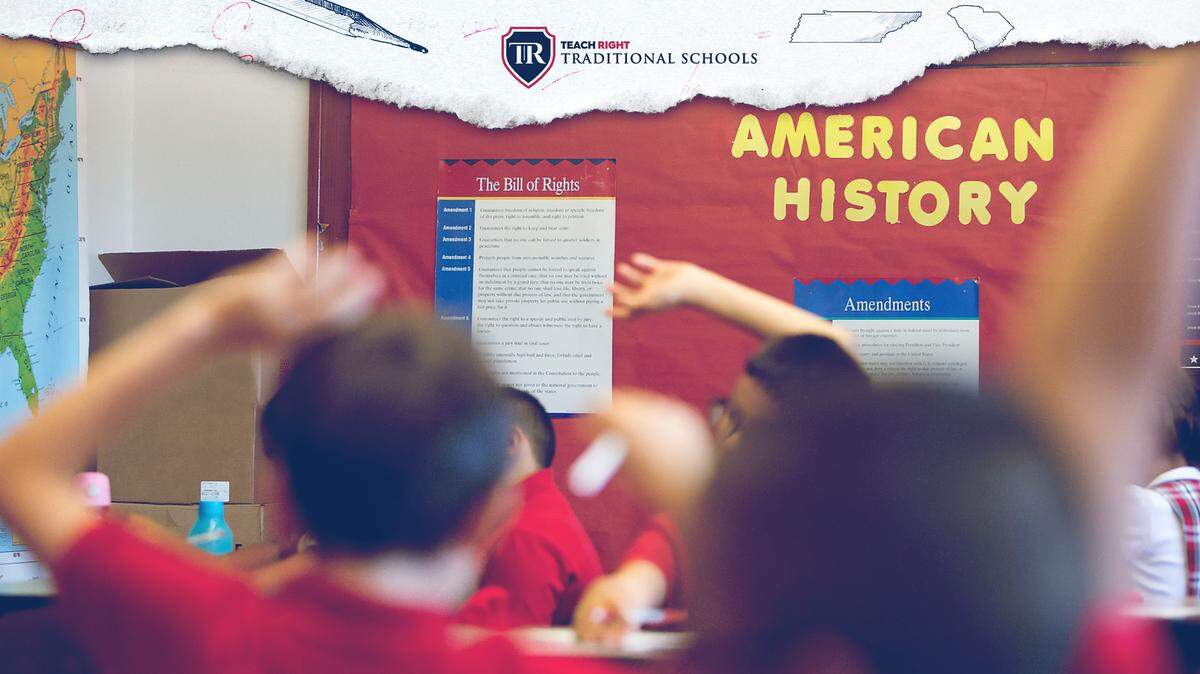
One common through line in The State’s reporting on the Charter Institute is Teach Right USA, a teacher training nonprofit the district formed in late 2022 and loaned $500,000 to help with startup costs.
Runyan, the Charter Institute CEO, is listed as Teach Right’s incorporator in documents filed with the S.C. Secretary of State and as the organization’s CEO in a business plan it submitted to the State Board of Education.
When Runyan and a group of other Charter Institute leaders teamed up with unidentified business partners to launch three charter schools in Tennessee in 2023, they listed Teach Right USA as the schools’ management organization, according to letters of intent filed with the Tennessee Department of Education.
The group’s paperwork presented Teach Right Traditional Schools as the brainchild of Charter Institute leaders and identified a board composed almost entirely of high-level Charter Institute and Teach Right USA employees.
A Charter Institute employee was listed as the schools’ primary contact and the Charter Institute’s Columbia address was used as Teach Right Traditional Schools’ mailing address.
Runyan has repeatedly denied that Teach Right USA was involved in the Tennessee schools project — which was abandoned shortly before The State reported on it in February 2024 — and has attributed the nonprofit’s designation as the schools’ “sponsoring entity” to a typo.
Charter Institute officials maintained that assertion when questioned by auditors, the report said.
“Institute leadership stated that the application mistakenly listed Teach Right USA as the sponsor for the school,” auditors wrote. “Institute leadership also stated that despite the similarities in names and individuals, Teach Right Traditional Schools and Teach Right USA are unrelated.”
The audit found that if Teach Right USA had successfully opened schools in Tennessee, it would have been operating as an EMO and its relationship with the Institute would require further study.
While multiple lawsuits have alleged the Charter Institute operates like a private management company with Teach Right USA acting as its service provider, auditors determined that the nonprofit was “not currently operating as an EMO.”
They did, however, find that Teach Right USA had contracted with four Institute-sponsored schools for a total of $30,500 in services.
They also found the Charter Institute was financially and administratively supporting Teach Right, which had received $1.25 million from the district since its inception, including $111,890 before the effective date of its agreement with the Institute.
Only $865,341 of the advanced funds had been repaid as of June, the report noted.
While Institute leadership would not directly confirm that public funds were used to support Teach Right USA, auditors said that was “likely” the case since the funding it provided the organization exceeded the amount the district reported earning in interest on investments, contributions and donations from private sources, refunds of prior year expenditures and other revenue from local sources.
Auditors said they were unable to find any provision in the Charter Schools Act that would sanction the district’s support of Teach Right USA, which it described as “a vendor that has provided services to Institute-sponsored schools.”
In its written response to the audit, the Charter Institute defended its support of Teach Right as “lawful and appropriate,” but said it had decided to terminate its partnership with the nonprofit to alleviate the agency’s concerns.
The Charter Institute board approved the termination of its fiscal sponsorship and administrative services agreement with Teach Right USA at its Nov. 13 meeting.
Teach Right Executive Director Tracey Williams said the nonprofit had recently established independent funding and secured its own fiscal agent, but did not reveal the identity of its new financial backer.
4. Charter Institute’s international travel questioned
Auditors not only couldn’t verify the Charter Institute’s claims that no public funds were used to pay for its 2024 trip to London, they also questioned the logistics of the trip itself.
The State reported earlier this year that the trip, which cost roughly $70,000, appeared to be light on professional development.
Documents show more than 16 hours of the trip’s itinerary were reserved for tourism, while only about 9 hours were set aside for three mandatory visits to high-performing British secondary schools.
Auditors reviewed the itineraries for the London trip and three other trips the Charter Institute’s Leadership Cohort has taken since 2024, and found they included visits to museums, dining in several restaurants and sightseeing.
“Recreational activities — such as sightseeing and visiting museums — could distract from the core objectives of building and improving professional skills,” the report states. “Waste can be minimized on trips by confining sightseeing to non-business hours, with business hours dedicated to touring schools, meeting with parliamentarians, and continuing education.”
Auditors also cast doubt on the financial rationale Charter Institute officials provided for the London trip.
They said a cost analysis the district shared showing it was far cheaper to fly 32 people to London than to send the same number of participants to conferences in Orlando, Florida or Myrtle Beach was flawed.
“We reviewed the data the Institute used in its cost analysis, and found that the Institute used regular registration fee rates (which are typically higher), as opposed to early registration rates, standard hotel rates instead of special conference rates, and a $912 per-person estimate for airfare from Charlotte, North Carolina to Orlando, Florida from June 29, 2025 to July 3, 2025,” auditors wrote. “This inflated the estimated cost of the trips. It is unclear why the Institute used these figures for its cost analysis.”
Furthermore, the report found the Institute spent $820,271 on travel over the course of three years, with nearly 60% ($477,834) of that travel dedicated to professional development.
By comparison, the Public Charter School District spent less than $200,000 on travel for professional development during the same period, auditors found.
5. Changes recommended to Charter Schools Act
The overarching theme of the Charter Institute audit is the need for reform to the state’s charter schools law, which is out of step with current industry practices and lacks mechanisms to enforce authorizer oversight.
“The Charter Schools Act does not address many of the types of conflicts of interest that could arise in the charter school sector,” the report’s summary states. “The act is largely silent on issues of conflict of interest, particularly conflicts related to sponsors and EMOs.”
Fifteen of the audit’s 49 recommendations involve revisions or clarifications to South Carolina’s charter schools law.
They include clarifying authorizer fundraising and donation practices, procurement, conflicts of interest and spending limitations; enhancing charter school board training requirements; and regulating the relationships between authorizers, boards and the for-profit management companies that operate many charter schools.
It remains to be seen whether lawmakers will prioritize charter school authorizer and EMO reform when they return to Columbia in January.
For the past several years, Senate Education Committee Chair Greg Hembree, R-Horry, has introduced bills that attempted to tackle EMO issues and give the state Education Department oversight of charter school authorizers, but the legislation has thus far failed to find support in the General Assembly.
House education Chair Shannon Erickson, R-Beaufort, said Friday she was hopeful that lawmakers would be prepared to move forward on authorizer reform using the Legislative Audit Council report as a guide.
“The underlying piece for me is the accountability for taxpayer dollars,” she said. “It’s our job as the General Assembly to make sure accountability and transparency is happening and there is law that directs it without any kind of ambiguity.”
This story was originally published November 22, 2025 at 5:00 AM.