Officials in once rural Chapin say there’s only so much they can do about growth
READ MORE
Communities in Transition
Several of Columbia’s surrounding neighborhoods are changing with development and businesses. Follow our Communities in Transition series as we explore how these areas are growing.
Expand All
One of Columbia’s ‘best kept secrets.’ Can Rosewood sustain charm amid growth?
Gilbert, long on the Midlands’ edge, is the latest frontier of housing growth
Officials in once rural Chapin say there’s only so much they can do about growth
Lexington’s Red Bank area has boomed with growth. Is it ‘too much, too fast’?
Al Koon grew up in Chapin. Plus or minus a few years in the Midwest for work in early adulthood, the man who now serves as mayor spent his whole life in the suburb of Columbia, a rural lake town just up Interstate 26.
Koon can still vaguely remember when Columbia Avenue, one of the town’s busiest roads, was only dirt. He graduated from Chapin High School with a class of less than 50 people.
His story — one of growing up and staying one’s whole life — is becoming a rarity in Chapin. The area has become a popular target for new residents and, in an attempt to meet the demand of them, new housing. As South Carolina has become one of the fastest growing states in the country, long-quiet suburbs in the Palmetto State have grown exponentially leading to pushback from longtime residents.
Chapin has an issue unique to a handful of other small municipalities in the Midlands. The town itself is small, geographically. It hired its first town administrator just three years ago. Some of its infrastructure, including roads and sewer lines, are decades old and meant for a few thousand folks. But increased development and growth in the area that surrounds the town’s borders has increased demands on the small town.
“Over the last 20 or 30 years, Chapin has been known as this quaint little lakeside town and now it’s growing into a place where people want to move to,” said Paul Sadler, president and CEO of the town’s chamber of commerce.
The town’s population has continued to grow in recent decades — rising from more than 1,400 as of 2010 to more than 1,800 as of the 2020 U.S. Census — and the growth outside its borders is adding further burdens to aging infrastructure. A study conducted by the town estimated that an additional 2,900 homes will be built in the service area, or the region that the town provides public services to, in the next 10 years, and the area’s population will grow by 6,670.
But does Chapin want to keep growing and, if so, is it ready to? Despite all of the changes, and possible growth in the coming years, the town has seen many projects drag on for years. As housing developers push to bring hundreds of new homes to one of the town’s largest roads, how could Chapin change and what does that mean for its future?
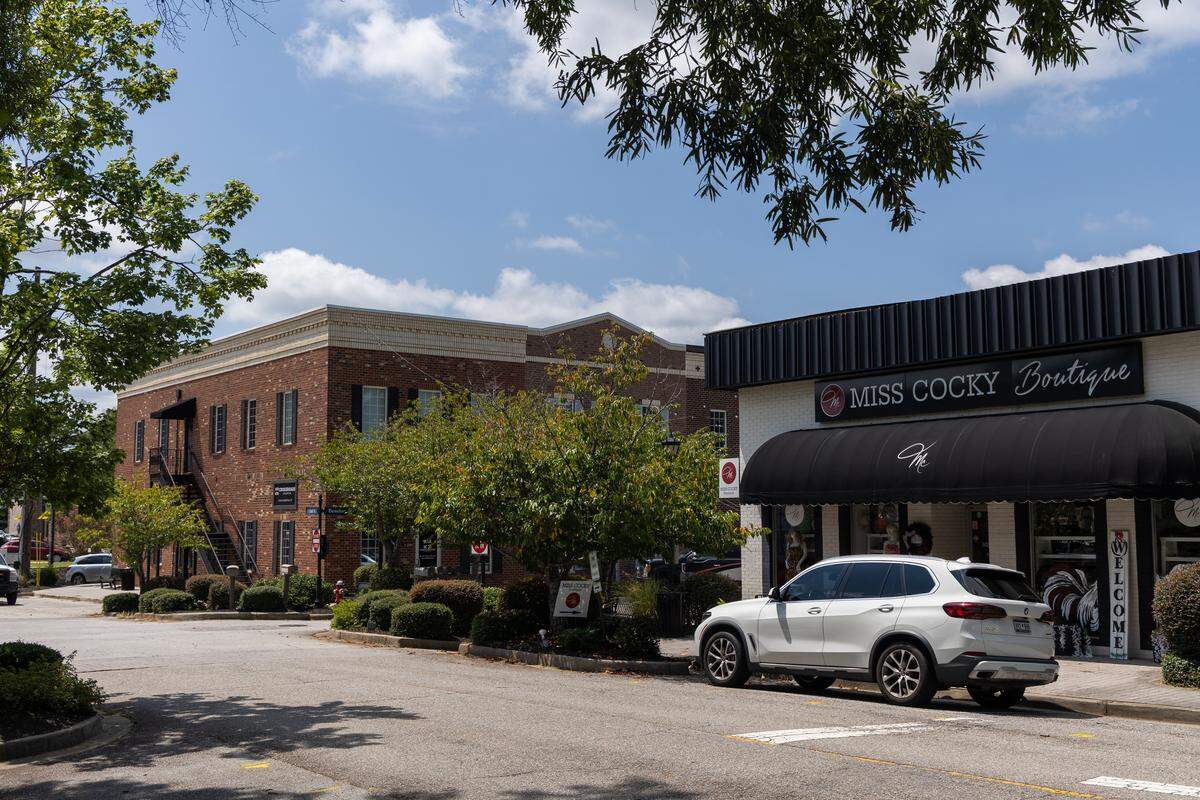
Growth along the outskirts
While the town has grown, only one neighborhood, the Boykin Hills subdivision, has been approved within the town’s less than two square miles in the last 15 years, Koon said. Though another massive housing development is being discussed, a mixed-use project called Brighton, the town limits have seen significantly less growth than the outskirts.
That project alone, which would bring 390 homes to 161 acres in town, has taken over a decade to come to fruition and, pending the town’s approval, is aimed to be completed in 2029.
“We’re very deliberate in how we choose to develop,” Town Administrator Nicholle Burroughs said. “It’s taken over 15 years for that to come to fruition and part of the reason is because the infrastructure wasn’t in place, the town of Chapin wasn’t really pursuing or encouraging that development until we got to a point where the expansion of Columbia Avenue was ready to happen.”
The town has spent more the last year going back and forth with the development company, Mungo Homes, to narrow the scope of the project and ensure plans include everything from enough parking to adequate landscaping.
The outskirts of Chapin, near Lake Murray, have seen more than 1,200 homes approved or constructed since January 2020, according to county planning documents. While the town has only added about 400 people to its population in the last decade, the zip code area that encompasses Chapin has added more than 7,500 people between 2010 and 2023, according to U.S. Census Data.
“We are getting inundated by the growth of the surrounding community and we are having to deal with all of those impacts,” Burroughs said.
The town has slowly begun annexing more properties into it, with the goal of being able to “control and manage” commercial growth and to be proactive about preserving Chapin’s resources, Burroughs said. But as town officials have made annexation a priority, it’s caused tension between them and county-level leadership.
“The county absolutely has taken measures for sustainable growth, reduced density, and [to] support the community that lives here today,” said Charli Wessinger, the Lexington county councilwoman who represents the Chapin area. “When you have a municipality that wants to annex as much as possible, to develop more densely than the county allows, it undermines all the good work the county has done, which the citizens approve and want.”
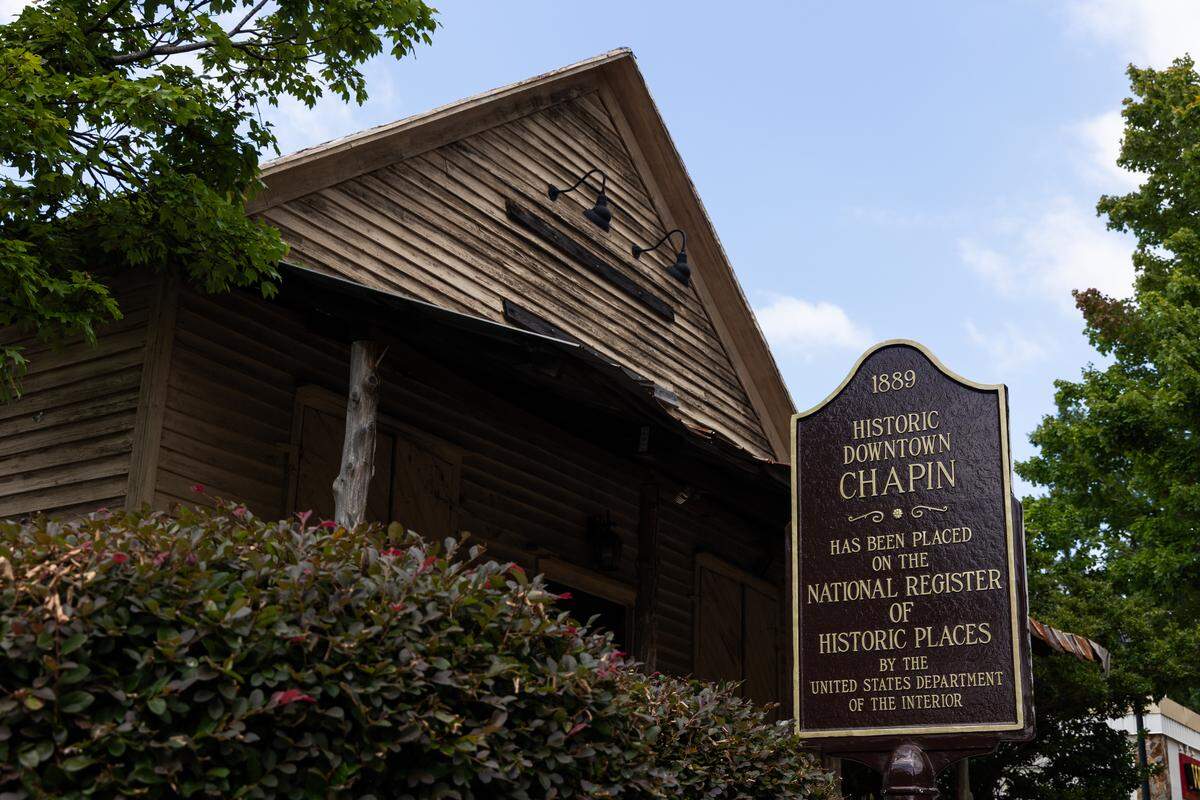
Managing growth
Krystal Ashe grew up in the Chapin area and her parents still live here. When she comes home to visit, she said, it feels like a different place.
“There were so many times that I went home recently where I blew through stop signs because I was like, ‘That wasn’t there before,’” Ashe said. “I learned to drive on these roads. … Now, all of a sudden there’s new roads and new stop signs and new roundabouts. I think of [Chapin] as a small town, but it’s really up and coming now.”
Ashe isn’t the only person to notice the growth in Chapin. The town, and Lexington County, have had to contend with some residents who don’t want the area to grow and housing developers who want to capitalize on the growing popularity of the suburbs.
“People have different ideas. Some want more amenities and some people want to dig up the asphalt and go back to dirt roads ... so trying to manage all the growth is certainly a huge challenge for us,” Koon said.
The substantial growth is a statewide issue and one that many municipalities have tried to get a handle on — last year, the Lexington County council adopted a new rule that requires proposed housing developments to go through concurrency review, a process that involves consulting local agencies like school districts and emergency services to determine how the project will impact those services. Others have begun imposing impact fees on developers and updating zoning ordinances to shape what growth in the Midlands will look like for years to come.
Chapin adopted a hospitality tax around five years ago, Burroughs said, in an attempt to begin saving for traffic improvements like updated stoplights, pedestrian crosswalks and bike lanes. It’s also moved to implement impact fees, charged to developers who bring new construction to the town.
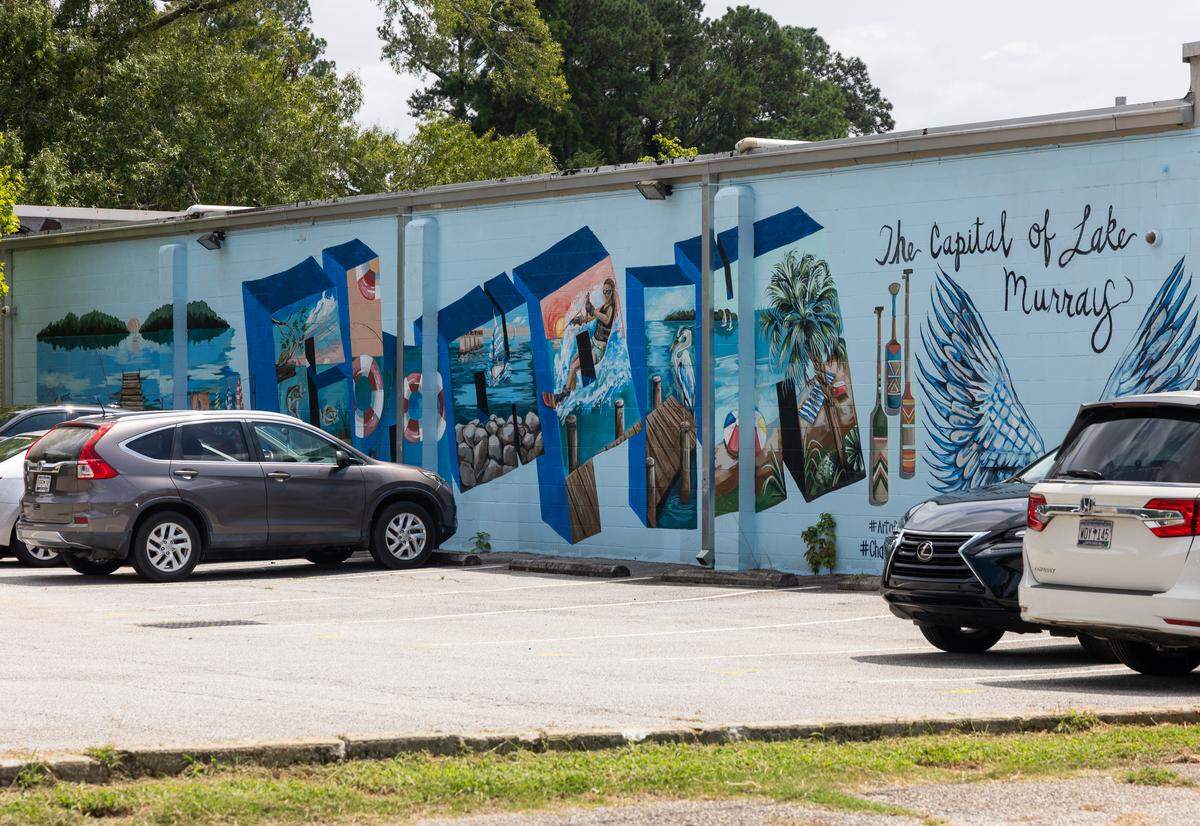
Infrastructure issues
Aside from balancing pressure on both sides of the town limits, from housing developers and residents, to determine what the area’s growth will look like, one of the biggest issues facing the town is its infrastructure — narrow roads that can’t keep up with the number of new commuters and dated water and sewer systems that overflow often.
“[The growth] has been positive in some ways, of course, for our commerce and commercial partners, but there’s a lot of infrastructure demands that we have to be responsive to as a community because we’re ultimately that center point,” Burroughs said.
Chapin has about $48 million in water and sewer infrastructure upgrades that it needs to work through, Burroughs said.
As the town and the surrounding area has grown, its dated sewer system has failed to keep up. Overflows, some directly into the crown jewel of the area, Lake Murray, have become increasingly more common — since 2022, Chapin’s system has seen 35 overflows, The State previously reported.
Two back-to-back overflows in May of this year sent some 120,000 gallons overflowing into the lake. Town officials have been aware of the issues and been working to fix them since at least 2020, officials told the Department of Environmental Services, but funding issues and the COVID pandemic have delayed some of the progress.
But small steps have been taken, like making an obsolete pond into an “equalization basin” that can store excess flows during periods of high activity, and the town is planning ahead on infrastructure for proposed developments before they’re completed.

Delayed progress
As one of the largest subdivision projects in recent years inches closer to approval, a number of projects in progress could completely change the town in the coming years. That’s evident just by driving off Interstate 26 into town as the state’s transportation department widens parts of Columbia Avenue and makes changes to Exit 91, the I-26 exit that leads into downtown Chapin.
Despite all its growth, the Chapin area still has underutilized land and unrealized potential. With land left, town officials believe that with specific zoning codes, which they significantly updated recently for the first time since the ‘80s, they’ve got the opportunity to shape Chapin into the type of community they want — big town amenities with small-town charm. The updates to the zoning ordinance was spurred by what the town called “lack of clarity and inconsistencies” in the old ordinance that did “little to protect existing neighborhoods.”
But the town has been holding out on some projects promised to transform it for years. On the way into town, wooden realtor signs advertising available lots dot the grassy shoulder. The roads that jut off from Columbia Avenue, where that huge Brighton residential development has been pitched, lead to a massive business park with no tenants.
The county spent more than $16 million as of 2020 on the Chapin Business & Technology Park. It sits vacant, more than seven years after it was completed, and the county paid nearly $200,000 to maintain and light the space in 2023. A few hundred feet up Columbia Avenue, a shopping center that’s struggled to find tenants is nearly full, four years after opening.
That shopping center, Chapin Commons, is set to be fully occupied by the end of this year, said Ron Pereira, the CEO of the company behind the center. Sitting across from Chapin High School, the project has found Pereira’s Happy Fork Restaurant Group pushing into the area with elevated dining concepts in the Chophouse of Chapin and Bakon Southern Eatery, another sign that people see the town as an up-and-coming destination.
It was rough going for Chapin Commons for a time. As of last summer, the shopping center opened in 2021 had just one other tenant. Multiple spaces sat empty, including an anchor space vacated by a gym in 2023. Pereira said the new additions include a Prisma Health cardiology office set to open soon and a new gym coming later this year. It seems Chapin really is ready for the project.
“It’s an amazing thing for us to have a fully occupied shopping center, to have all the construction done. I’m looking forward to that tremendously,” Pereira told The State.
With the completion of that project in view, and with the handful of other projects in the works, growth in the Chapin area isn’t stopping any time soon.
This story was originally published August 28, 2025 at 5:00 AM.